

Unlock 10% off your first order
High-phenolic olive oil, explained.
What the polyphenol numbers mean, how to read a certificate, how to spot the real thing, and how to use it every day.
High polyphenol olive oil, also called high-phenolic olive oil, is extra virgin olive oil with a lab-measured polyphenol content well above ordinary oil, usually several hundred mg/kg. The benchmark is 250 mg/kg, the EU olive oil health-claim threshold. It usually comes from early-harvest olives milled within hours, and it tastes bitter and peppery. The only proof is a dated HPLC lab result for the batch you buy. This guide covers what the numbers mean, how they are measured, which brands publish them, and who the oil suits.
Understand it
Judge it
What Is High Phenolic Olive Oil?
At its core, “high phenolic” is a scientific classification. It describes an olive oil that contains a significantly elevated concentration of polyphenols — a group of naturally occurring antioxidant compounds that protect the olive fruit from environmental stress and that researchers study for their effects in the body.
Polyphenol levels vary considerably between extra virgin olive oils. High-phenolic olive oil is distinguished by an elevated concentration confirmed through laboratory testing. Because these values can change with each harvest and batch, the current Certificate of Analysis provides the most reliable measurement.
The term “phenolics,” “phenolic compounds,” and “polyphenols” are often used interchangeably. Technically, polyphenols are the broad family of plant-based compounds, and phenolics are the specific members found in olive oil. All the key compounds — oleocanthal, oleacein, hydroxytyrosol — are types of polyphenols.
The Sensory Signature
High phenolic olive oil doesn’t taste like the mild, buttery oil most people are accustomed to. It is robust, complex, and unmistakably alive. You’ll notice:
-
Fruitiness: Notes of green grass, artichoke, or green almond — the aroma of fresh, unripe olives.
-
Bitterness: A pleasant bitter note on the tongue, signaling the presence of oleacein and other antioxidant compounds.
-
Pungency (the “throat sting”): A peppery or stinging sensation in the back of your throat — the hallmark of oleocanthal. This signature sensation, which can even cause a slight cough, is not a defect. It is the single best sensory indicator that you are consuming a genuinely potent oil.
In Mediterranean culture, this peppery kick has been the primary way consumers judge an oil’s “strength” and freshness for centuries. Tasters long read the sting as a sign of a fresh, strong oil, well before anyone identified the molecule behind it. For a deeper look at the cultural history of this revered product, see our guide to Greek olive oil heritage.
What Is the Highest Polyphenol Olive Oil?
No single oil holds that title for good. Several brands and competitions advertise record polyphenol figures, but those numbers are hard to compare. The same oil can give different results depending on how, when and by whom it was tested.
Five things drive the number on a label:
-
Test method: HPLC separates and measures individual phenolic compounds. NMR methods report a defined group of compounds, such as oleocanthal and oleacein, measured in a different way. A figure from one method should not be compared directly with a figure from the other. Our HPLC vs NMR guide explains why.
-
Olive variety: Each cultivar has its own typical phenolic range. Greek Koroneiki is known for robust, bitter oils.
-
Harvest timing: Green, early-harvest olives tend to give oils richer in phenolic compounds than fully ripe fruit.
-
Storage: In an 18-month study, olive oil phenolics broke down considerably faster at 25 °C than at 15 °C (Krichene et al., 2015).
-
Age: A result measured at bottling describes the oil on that day. Phenolic content falls as the oil ages, so an old report can overstate what is in the bottle now.
How to Compare Oils Fairly
Ask for a dated lab report for the specific batch you are buying. Check that it names the laboratory, the method and the date of analysis. Compare HPLC results only with other HPLC results, and read the harvest date alongside them. A number with no method, date or batch is a marketing figure, not a measurement.
Pomoni’s own oil measured 635 mg/kg total polyphenols by HPLC. That is Pomoni’s measured figure, not a claim to be the highest. You can read the reports on our testing page.
What Is the Best Olive Oil for Health?
The evidence points to fresh extra virgin olive oil with a measured polyphenol content, stored away from light and heat. No study has named a single best brand.
-
Extra virgin grade: The largest olive oil diet trial, PREDIMED, supplied extra virgin olive oil, not refined oil (Estruch et al., 2018).
-
Measured polyphenols: In the EUROLIVE trial, olive oils that differed only in phenolic content had different effects on blood lipid markers (Covas et al., 2006). The research section below has the details.
-
The EU claim threshold: The EU allows one health claim for olive oil polyphenols under Regulation 432/2012, based on an EFSA assessment (EFSA, 2011). It reads: “olive oil polyphenols contribute to the protection of blood lipids from oxidative stress; the effect is obtained with a daily intake of 20 g of olive oil containing at least 5 mg of hydroxytyrosol and its derivatives.”
-
Freshness: Look for a harvest date from the latest season. Phenolics break down during storage, and faster in warm conditions (Krichene et al., 2015).
-
Light-blocking packaging: Over 10 months of light exposure, oil in an opaque multilayer pack kept more antioxidants than oil in glass (Esposto et al., 2021). Dark glass or tin, kept in a cool cupboard, limits that exposure.
Taste is a useful check too. Bitterness and a peppery sting in the throat usually signal phenolic compounds. Using the oil raw, as your everyday fat, keeps them intact.
Regular EVOO vs High-Phenolic Olive Oil
High-phenolic olive oil is still extra virgin olive oil. The difference is that it contains a higher, measurable concentration of naturally occurring polyphenols.
Harvest Timing
High-phenolic olive oil is commonly produced from olives harvested early, while they are still green. Early-harvest olives generally produce less oil, but the oil can retain a greater concentration of phenolic compounds.
Flavor
Regular extra virgin olive oil can range from mild and buttery to fruity and robust. High-phenolic olive oil is more likely to have noticeable bitterness and a peppery sensation in the throat. These qualities are associated with the oil’s naturally occurring phenolic compounds.
Verification
The words “extra virgin” do not tell you how many polyphenols an oil contains. A high-phenolic claim should be supported by current laboratory testing for the specific harvest or batch. Because phenolic levels naturally vary, check the oil’s Certificate of Analysis rather than relying on a fixed marketing number.
Choosing the Right Oil
Both types can have a place in the kitchen. Choose an extra virgin olive oil according to its freshness, quality, and flavor. Choose a verified high-phenolic olive oil when measured phenolic content is an important part of your decision.
Key Phenolic Compounds and Why They Matter
High phenolic olive oil is not defined by a single compound but by a full spectrum of bioactive polyphenols that work synergistically. Here are the most researched and important:
Oleocanthal
Oleocanthal is the compound responsible for the characteristic peppery sting. Its name literally derives from “oleo” (olive), “canth” (sting), and “al” (aldehyde). In 2005, laboratory work showed that oleocanthal inhibits COX-1 and COX-2, the enzymes that ibuprofen targets (Beauchamp et al., 2005). They estimated that 50 g of the oil they studied supplied oleocanthal equal to roughly 10% of an adult ibuprofen pain-relief dose. That is a small amount, and it does not make olive oil a substitute for medicine.
Oleocanthal has also been examined in laboratory and animal studies of brain proteins and cancer cells. Those early findings are described in the research section below.
Oleacein
Oleacein is one of the most abundant antioxidants in high phenolic olive oil. It is studied mainly for its ability to protect LDL particles from oxidation. In mice fed a high-fat diet, oleacein limited the growth of fat cells (Lepore et al., 2019). In a mouse model of multiple sclerosis, it reduced nerve inflammation (Gutiérrez-Miranda et al., 2020).
Hydroxytyrosol
Hydroxytyrosol is a potent antioxidant. Together with its derivatives, it is the compound named in the EU olive oil health claim. Laboratory and animal studies have also looked at its effects in the brain and during exercise. See our hydroxytyrosol page for the details.
Other Key Compounds
-
Tyrosol: A close relative of hydroxytyrosol, studied for its antioxidant activity.
-
Oleuropein aglycon and ligstroside aglycon: Contribute to the characteristic bitter taste and provide strong antioxidant and antimicrobial activity.
-
Lignans: Plant compounds also found in seeds and whole grains.
These compounds occur together in the oil. Most human studies tested whole olive oil rather than single isolated compounds. For a deep dive into polyphenol science, see our polyphenols and olive oil science guide.
What the Research Shows About High Phenolic Olive Oil
Research on olive polyphenols ranges from cell studies to large human trials. The strength of the evidence differs a lot between them, so each finding below names the type of study.
Heart and Blood Lipids: Human Trials
PREDIMED assigned 7,447 adults aged 55 to 80, all at high cardiovascular risk, to one of three diets. After a median of 4.8 years, major cardiovascular events had occurred in 3.8% of the Mediterranean diet with extra virgin olive oil group. The figure was 4.4% in the group advised to cut dietary fat (Estruch et al., 2018). This 2018 paper replaced the original 2013 report after problems with randomisation were found. The whole diet changed, so the result cannot be credited to olive oil alone.
EUROLIVE tested polyphenols more directly. Two hundred healthy men took 25 mL a day of three olive oils that differed only in phenolic content, for three weeks each. HDL cholesterol rose and oxidised LDL fell in step with the oils’ phenolic content (Covas et al., 2006).
Findings like these underpin the EU health claim described below. For a review of heart-related evidence, visit our olive oil health benefits guide.
Inflammation: Laboratory Work and Diet Trials
Oleocanthal suppresses pro-inflammatory markers including IL-6, TNF-α and PGE2 in laboratory studies. In rheumatoid arthritis, the human evidence is for the diet as a whole. A 12-week randomised trial of a Mediterranean diet improved disease activity and physical function compared with a standard Western diet (Sköldstam et al., 2003). No trial has tested high-phenolic olive oil on its own in arthritis. Our guide to the anti-inflammatory diet for joint pain covers those trials.
For a deeper look at the clinical inflammation data, read our cluster article on high phenolic olive oil and inflammation.
Brain: Laboratory and Animal Studies
In laboratory and mouse work, oleocanthal increased the clearance of beta-amyloid, a protein studied in Alzheimer’s research (Abuznait et al., 2013). In mice with an experimental model of multiple sclerosis, oleacein reduced nerve inflammation and loss of myelin (Gutiérrez-Miranda et al., 2020). These are not human findings.
Metabolism: Animal and Cell Studies
In mice fed a high-fat diet, oleacein limited the growth of fat cells and reduced inflammatory cells in fat tissue. In fat cells grown in the lab, it reduced fat build-up and raised adiponectin (Lepore et al., 2019). Human trials have not yet tested this.
Cell Studies
In cell studies, oleocanthal killed cancer cells while sparing normal cells (LeGendre et al., 2015). These are early laboratory findings. They do not show that eating olive oil prevents or treats any disease.
The EU Health Claim and the 250 mg/kg Threshold
In 2012 the European Commission authorised a health claim for olive oil polyphenols in Regulation (EU) No 432/2012, based on a 2011 opinion from the European Food Safety Authority (EFSA). It states that olive oil polyphenols contribute to the protection of blood lipids from oxidative stress, provided the oil contains at least 5 mg of hydroxytyrosol and its derivatives per 20 g of oil, which is about 250 mg/kg of those compounds. Our full guide to the EU claim covers the wording, the conditions and how labs test for it.
The claim sets a clear benchmark: oils below this level do not qualify to carry it. Many ordinary olive oils fall short, which is one reason studies on generic “olive oil” can be hard to compare.
High-phenolic olive oils can exceed this benchmark, but the exact concentration varies by harvest and batch. Current laboratory results should be used to confirm that an oil meets the required threshold. To see how testing and transparency help protect buyers, read our olive oil authenticity and fraud guide.
How High Phenolic Olive Oil Is Produced
High phenolic content doesn’t happen by accident. It is the direct result of deliberate agricultural choices that prioritize potency over volume at every stage.
Early Harvest (Green Harvest)
This is the single most important factor. Olives harvested early in the season, while still green and unripe, contain the highest concentration of polyphenols. As olives ripen and turn black, the oil yield increases but polyphenol content plummets. Choosing an early harvest means sacrificing volume for potency — a high-phenolic producer might extract only 10–12 liters from 100 kg of olives, compared to 20 liters for a mass-market producer using ripe fruit. This immediately doubles production costs.
Cold Extraction
To qualify as extra virgin, olive oil must be extracted using only mechanical means without excessive heat. But truly high phenolic producers go beyond the legal minimum. While “cold pressed” legally means below 27°C (80°F), premium producers press at even lower temperatures. Keeping the paste cooler preserves heat-sensitive phenolic compounds — but reduces the yield even further. The producer is voluntarily leaving oil behind in the waste (pomace) to protect the potency of what they do extract.
Immediate Milling
Once an olive is picked, the clock starts ticking. Polyphenols begin degrading the moment the fruit is separated from the tree. For high phenolic production, olives must be milled within hours of harvest — not days, as is common in commodity production. This requires more staff, better logistics, and often higher transportation costs.
Rigorous Testing
High phenolic status must be verified through laboratory analysis. Methods like HPLC (High-Performance Liquid Chromatography) and NMR (Nuclear Magnetic Resonance) measure phenolic compounds such as oleocanthal, oleacein and hydroxytyrosol. They measure differently, so their numbers are not interchangeable (see HPLC vs NMR). This testing isn’t a one-time event; every batch and harvest must be tested to ensure consistency. A Certificate of Analysis (CoA) from an independent lab is the gold standard of transparency.
Protective Packaging and Storage
Polyphenols degrade when exposed to light, heat, and oxygen. Premium high phenolic oil requires dark, UV-proof glass or tin, nitrogen flushing to displace oxygen in the bottle before sealing, and climate-controlled warehousing at around 60°F (15°C). Even the best oil will lose potency within 18–24 months — harvest date matters.
For a detailed look at why high phenolic olive oil costs more (and why it’s worth the investment), see our dedicated article.
How to Choose Quality High Phenolic Olive Oil
The olive oil market is rife with misleading labels and outright fraud. Here’s how to identify the real thing:
1. Demand Lab-Verified Polyphenol Content
Look for products that specify phenolic content in mg/kg or mg per daily dose. Vague claims like “rich in antioxidants” without numbers are a red flag. A trustworthy producer publishes a Certificate of Analysis listing individual phenolic compounds — not just a lumped “total polyphenol” number. Pomoni publishes batch-specific Certificates of Analysis verified through HPLC testing.
2. Check the Harvest Date
A “best by” date tells you almost nothing — it’s typically set two years from bottling, not from harvest. Olive oil is essentially a fresh fruit juice; it is best consumed as close to harvest as possible. Look for the harvest date (e.g., October/November of the most recent season). If it’s missing, be skeptical.
3. Trust Your Senses
Authentic high phenolic olive oil should be fruity, bitter, and peppery. If it tastes smooth, bland, or neutral, it likely has low polyphenol content regardless of what the label says. The throat sting is your built-in quality test.
4. Look at the Packaging
Never buy olive oil in a clear glass or plastic bottle. Polyphenols are destroyed by light and oxygen. Choose oils in dark glass, opaque bottles, or tins. Check that the brand uses nitrogen capping or inert gas flushing.
5. Research the Source
A brand that is serious about quality will be transparent about where its olives are grown, how they are harvested, and how the oil is processed. Look for details about cultivar, region, extraction method, and third-party certifications. Learn more about identifying authentic products in our olive oil authenticity and fraud guide.
Who Is High Polyphenol Olive Oil For?
It is still olive oil: the same fat and about 120 calories per tablespoon as any other. What changes is how many polyphenols come with each spoonful. It tends to suit:
- People who already use olive oil every day and want the most polyphenols from the amount they already eat, rather than eating more oil.
- Cooks who like strong flavour. The bitterness and pepper are the point. Used raw, on salads, beans, soups and bread, it tastes the way it was made to.
- Label readers. If you want an oil you can check against the EU 250 mg/kg benchmark, a high-phenolic oil with a published, dated certificate lets you do that.
It suits fewer people if the bitter, peppery taste is a deal-breaker, or if you would struggle to use a bottle while it is fresh. Polyphenols fade after opening, so a small bottle used in a few months beats a big one that sits. A capsule such as Phenolia Daily is the no-taste alternative, and our olive oil vs capsules comparison sets the two side by side. If you take blood-thinning or other regular medication, or are planning large amounts, talk to your doctor first.
How to Use High Phenolic Olive Oil Every Day
High phenolic olive oil is both a culinary ingredient and a functional food. How you use it determines how much benefit you receive.
Best Practice: Use It Raw
Raw applications maximize polyphenol retention. Drizzle generously over:
-
Salads and vinaigrettes
-
Roasted or grilled vegetables
-
Soups and stews (added after cooking)
-
Grilled fish or meat
-
Avocado toast or yogurt
-
Crusty bread (the Mediterranean classic)
A Daily Spoonful
Many health-focused consumers take 1–2 tablespoons of high phenolic olive oil straight each morning. This is the most direct way to ensure a consistent daily amount of polyphenols. For reference, the EU health claim is based on 20 g of olive oil a day (about 1.5 tablespoons).
Can You Cook with It?
Yes, but with caveats. Polyphenols are sensitive to heat, light, and oxygen. Lab studies show that oleocanthal and hydroxytyrosol are relatively stable at low to moderate cooking temperatures (up to around 160–170°C/320–340°F). However, deep frying above 180°C can reduce total polyphenols by over 50%. For high-heat cooking, use a standard cooking oil and save your high phenolic EVOO for finishing and raw applications. For detailed guidance, read our article on cooking with high phenolic olive oil.
Supplement Form (Capsules)
For those who prefer a capsule routine, Phenolia combines high-purity Mediterranean olive oil, olive leaf, and Greek Mountain Tea in a two-capsule daily serving. It is a formulated supplement rather than bottled olive oil placed inside a capsule, so its formula and testing should be considered separately from liquid extra virgin olive oil.
Maximize Absorption
Polyphenols work synergistically with other nutrients. Pairing high phenolic olive oil with polyphenol-rich foods — tomatoes, leafy greens, nuts, and omega-3-rich fish — amplifies absorption and health effects, a principle central to the Mediterranean diet.
Frequently asked questions
What does “high phenolic” mean in olive oil?
“High phenolic” describes olive oil with an elevated, measurable concentration of naturally occurring polyphenols. The European Food Safety Authority authorizes a health claim when an oil provides at least 5 mg of hydroxytyrosol and its derivatives per 20 g of oil. Because polyphenol levels vary by harvest and batch, the claim should be confirmed through current laboratory testing.
How is high phenolic olive oil different from regular extra virgin olive oil?
All genuine extra virgin olive oil contains some polyphenols, but the amount varies considerably. High-phenolic olive oil has an elevated concentration confirmed through laboratory testing. Early harvesting, careful extraction, immediate milling, and proper storage can all help preserve these compounds.
What is the highest polyphenol olive oil?
No single oil holds that title for good. Results depend on test method, variety, harvest timing, storage and age. Compare oils using a dated HPLC lab report for the batch you are buying. Pomoni’s oil measured 635 mg/kg by HPLC.
What is the best olive oil for health?
Studies point to fresh extra virgin olive oil with measured polyphenols, a recent harvest date and light-blocking packaging. The EU health claim applies to oil providing at least 5 mg of hydroxytyrosol and its derivatives per 20 g.
Is high phenolic olive oil safe for daily use?
Yes. High phenolic olive oil is a whole food that has been consumed daily in Mediterranean cultures for thousands of years. The Mediterranean diet, which features olive oil as its primary fat, is one of the most studied and safest dietary patterns in the world. However, individuals on blood-thinning medications (warfarin, aspirin, clopidogrel) should consult their healthcare provider, as the oil’s natural anti-platelet effects may enhance anticoagulant activity. Those scheduled for surgery should discontinue use at least two weeks before the procedure.
How much should I take each day?
The EU health claim is based on 20 g of olive oil a day (about 1.5 tablespoons) containing at least 5 mg of hydroxytyrosol and its derivatives. Many trials used similar daily amounts, taken consistently rather than occasionally. Capsules are an alternative for people who want a fixed daily amount.
Why does high phenolic olive oil sting my throat?
That peppery or stinging sensation is caused by oleocanthal, a polyphenol that acts on the same COX enzymes as ibuprofen in lab studies. Far from being a defect, this “throat sting” is the most reliable sensory indicator of a potent, fresh, authentic high phenolic oil. If your olive oil is completely smooth and mild, it almost certainly has low polyphenol content.
Does cooking destroy the polyphenols?
Partially. Low to moderate heat (sautéing, light frying) preserves a significant portion of polyphenols. However, prolonged cooking above 180°C (360°F) — especially deep frying — can reduce polyphenol content by more than 50%. For maximum health benefit, use high phenolic olive oil as a finishing oil or consume it raw. Reserve cheaper cooking oils for high-heat applications.
How can I verify that my olive oil is truly high phenolic?
Look for three things: (1) a specific polyphenol concentration stated in mg/kg, not vague marketing language; (2) an independent Certificate of Analysis (CoA) from a recognized laboratory using HPLC or NMR testing; and (3) a harvest date from the most recent season. Pomoni publishes its batch lab results on its testing page.
Can vegans benefit from high phenolic olive oil?
Absolutely. High phenolic olive oil is 100% plant-based and fits seamlessly into a vegan lifestyle. It is a plant source of monounsaturated fat and olive polyphenols, and it pairs well with plant omega-3 sources like flaxseed and walnuts.

Every Pomoni article on high-phenolic olive oil
The spokes of this guide, newest first. Each one answers a single question with sources you can check.

Gundry MD Olive Oil vs High-Phenolic Olive Oils: An Honest Comparison
Gundry MD Polyphenol-Rich Olive Oil is a Moroccan extra virgin olive oil sold on the claim that it has about 30 times more polyphenols...
Read →
The EU Olive Oil Health Claim (5 mg per 20 g), Explained
The EU olive oil health claim is the only health claim Europe allows for olive oil polyphenols: "Olive oil polyphenols contribute to the protection...
Read →
Polyphenols in Olive Oil: mg/kg Levels Explained
Polyphenols in olive oil are measured in milligrams per kilogram (mg/kg), and extra virgin olive oils range from under 100 to well over 1,000...
Read →
Early Harvest Olive Oil: What It Means and Why It Has More Polyphenols
Early harvest means olives picked green before full ripeness, giving less oil but more polyphenols, though the term has no legal definition.
Read →
Can You Cook with High Phenolic Olive Oil? Heat, Polyphenols & Tips
High phenolic olive oil has earned a reputation as one of the most potent functional foods in the Mediterranean diet. Characterized by elevated levels...
Read →
Fresh Harvest Olive Oil: Why Timing Matters
Imagine biting into a crisp, green apple plucked straight from the tree. It is tart, firm, and bursting with vibrant flavor. Now, imagine biting...
Read →
The Rise of Authentic Green Olive Oil in the U.S. Wellness Industry
For decades, the American approach to olive oil was simple: it was a kitchen staple. It sat next to the salt and pepper, used...
Read →
Why High-Phenolic Olive Oil Costs More
High-phenolic olive oil can cost more because the producer is trying to preserve and verify a specific group of compounds while still making sound...
Read →
Why Most Olive Oils Lose Their Polyphenols (And What Pomoni Does Differently)
You buy a bottle of "Extra Virgin" olive oil, believing you are making a healthy choice. You imagine it is packed with antioxidants, ready...
Read →
Why High Phenolic Olive Oil Is Called ‘Liquid Gold’ in Mediterranean Culture
In the sun-drenched landscapes of the Mediterranean, from the rocky hills of Greece to the sprawling groves of Italy and Spain, the olive tree...
Read →
Highest Polyphenol Olive Oil Brands, Compared by Lab Result
The highest polyphenol olive oils that publish lab results currently report from about 500 to over 2,600 mg/kg, but the numbers only compare fairly...
Read →
Pomoni EVOO: How It Stacks Up Against Research-Backed Doses
When choosing a high-quality extra virgin olive oil (EVOO), the numbers on the label matter. Words like "high-phenolic" sound promising, but what do they...
Read →WHERE TO START
Taste the numbers.
Pomoni's early-harvest Greek olive oil is HPLC-tested every batch, with the certificate published. Bitter, peppery, and exactly what this guide describes.
Shop the olive oil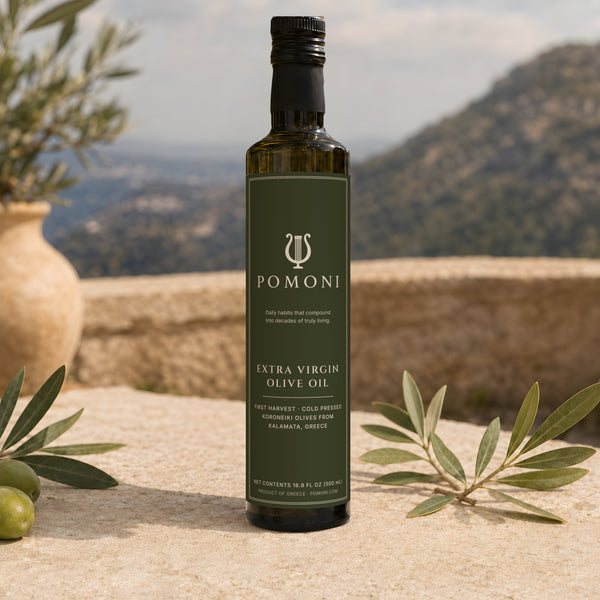
Pomoni High-Phenolic Extra Virgin Olive Oil from Greece
From $29.00

Verified olive polyphenols - from a single Greek grove, proven batch by batch. Prove it, then sell it.
O-Liv LLC, doing business as Pomoni · Bettendorf, Iowa
Verified olive polyphenols - from a single Greek grove, proven batch by batch. Prove it, then sell it.
O-Liv LLC, doing business as Pomoni · Bettendorf, Iowa