
Unlock 10% off your first order
Greek olive oil, explained.
The cultivar, the climate, the PDO regions and the table. Why Greece makes more extra virgin than anyone, and why much of it is bottled under other flags.
Greek olive oil is considered among the world's best because Greece turns a higher share of its crop into extra virgin grade than any other major producer, around four fifths, and because its dominant cultivar, Koroneiki, is small, early-ripening and unusually rich in polyphenols. Much of it is exported in bulk and bottled abroad under other flags, so the label matters more than the country. This guide covers the history, the cultivar, the terroir, the PDO system, how Greek oil compares with Italian and Spanish, and how Greeks actually use it at the table.
Origin
The Pomoni grove
If you have ever dipped a piece of crusty bread into a saucer of golden-green oil at a taverna in Athens, or drizzled it over a fresh horiatiki salad, you know the truth: not all olive oil is created equal. While Italy and Spain are massive producers, Greece holds a special, almost sacred, place in the world of olive oil. It is not just a condiment here; it is history, medicine, and culture bottled up.
For thousands of years, the olive tree has been a symbol of peace, wisdom, and victory in Greece. But beyond the mythology, there is science and craftsmanship that elevate Greek olive oil above the rest. From the nutrient-dense soil of the Peloponnese to the traditional harvesting methods that prioritize quality over quantity, there are distinct reasons why connoisseurs and health experts alike crown Greek olive oil as the gold standard.
In this deep dive, we will explore exactly why this "liquid gold" reigns supreme, examining the unique olive varieties, the unparalleled health benefits of high-phenolic content, and the meticulous production standards that define the industry.
The Roots of Excellence: A History Written in Oil
To understand why Greek olive oil is superior, you have to look at the timeline. The relationship between Greeks and the olive tree stretches back to the Neolithic age. Unlike other regions where olive cultivation was introduced later, Greece is arguably the birthplace of the domesticated olive.
Learn more about the incredible origins and journey of Greek olive oil on our Our Story page.
Ancient Wisdom Meets Modern Tables
In ancient Greece, olive oil wasn't just food. It was used to anoint kings, fuel lamps, and cleanse the bodies of athletes. Homer famously called it "liquid gold," and Hippocrates, the father of medicine, prescribed it for over 60 different ailments. This deep-rooted history means that the methods used today are not just industrial processes; they are cultural rituals passed down through generations.
If you'd like to discover how these traditions influence the quality of our olive oil today—or if you have questions about sourcing—please Contact Us.
When you buy Greek olive oil, you aren't just buying a fat source; you are buying millennia of agricultural wisdom, now backed by modern health research. This historical continuity ensures a respect for the fruit that mass-production facilities in other countries often lack. The producers we work with at Pomoni understand this legacy intimately. You can read more about how we connect this ancient tradition to modern wellness on our Our Story page.
The "Green Gold" Difference: Quality Over Quantity
One of the most telling statistics about Greek olive oil is the percentage of production that qualifies as Extra Virgin. If you’re curious about how this commitment to quality is upheld every harvest, learn more about our farmers’ process on Our Story.
The Extra Virgin Standard
"Extra Virgin" (EVOO) is the highest classification for olive oil. It means the oil has perfect flavor and aroma, and chemical parameters (like acidity) are within strict limits.
-
Greece: Approximately 80% of all olive oil produced in Greece is Extra Virgin (source).
-
Italy and Spain: In contrast, a significant portion of production in these countries is often lower quality (lampante or virgin), which requires refining to be edible.
Why the discrepancy? It comes down to scale and philosophy. Greece is characterized by small, family-owned groves rather than massive industrial plantations. These smaller groves allow for meticulous care. Farmers can harvest trees individually at the perfect moment of ripeness, ensuring the fruit is not damaged or over-oxidized before pressing. To experience the difference for yourself, contact us for details on our range.
Low Acidity Is Key
Acidity is the primary chemical marker of quality. To be classified as Extra Virgin, oil must have an acidity of less than 0.8%. However, premium Greek oils often boast acidity levels as low as 0.2% or 0.3%. This ultra-low acidity is a testament to the health of the fruit and the speed at which it is pressed after harvesting. Discover how our methods ensure such exceptional quality on our Our Story page.
The Crown Jewel: Koroneiki Olives
Just as wine depends on the grape varietal, olive oil depends on the olive cultivar. While there are dozens of varieties grown across Greece, one reigns supreme: the Koroneiki.
The Queen of Olives
Native to the Peloponnese and Crete, the Koroneiki olive is small but mighty. It is not grown for table eating because it is too small; all its energy goes into producing oil.
-
Flavor Profile: Koroneiki olives produce an oil that is robust, fruity, and peppery. It has distinct notes of green grass, artichoke, and sometimes green apple.
-
Stability: The oil from these olives is incredibly stable, meaning it retains its flavor and nutrients for a long time without going rancid.
The "kick" you feel at the back of your throat when you taste high-quality Greek olive oil is actually a sign of quality. It indicates the presence of oleocanthal, a powerful anti-inflammatory compound found in high concentrations in Koroneiki olives.
To learn more about our passionate commitment to the Koroneiki olive and its central place in Greek olive oil excellence, visit Our Story. Have questions about how we source and select these olives? Contact Us anytime to connect with our expert team.
High Phenolic Content: The Medicinal Grade Difference
At Pomoni, we are obsessed with the health potential of olive oil. This brings us to perhaps the most critical factor distinguishing Greek oil: phenolic content. Discover more about why we focus on high-phenolic oil and our health-driven mission on Our Story.
What Are Polyphenols?
Polyphenols are naturally occurring micronutrients with potent antioxidant properties. In olive oil, the stars are oleocanthal and oleacein.
-
Oleocanthal: Mimics the anti-inflammatory effects of ibuprofen.
-
Oleacein: Known for its antioxidant and neuroprotective properties.
Because of the specific climate conditions in Greece—hot, dry summers and mild winters—and the dominance of the Koroneiki variety, Greek olive oils are often exceptionally high in these polyphenols. For detailed information on our sourcing and production methods, visit Our Story.
Beyond Flavor
While many oils are marketed for their taste, "High Phenolic" olive oil is marketed for its health benefits. The European Union has even approved a health claim (EU 432/2012) stating that olive oil polyphenols contribute to the protection of blood lipids from oxidative stress.
However, getting enough of these phenols through diet alone can be difficult due to the calorie density of oil. This is exactly why we developed our Pomoni supplements—to deliver the power of high-phenolic Greek olive oil without the excessive calories. If you have questions about how we capture these nutrients or want to speak with our experts, please Contact Us.
Terroir: The Greek Climate Advantage
Terroir is a term usually reserved for wine, describing how the environment—soil, topography, and climate—affects the flavor and quality of the crop. When it comes to olive oil, Greece has a unique terroir that is practically engineered for olive trees. For a deeper dive into the origins and traditions behind our sourcing, see Our Story.
Stress Creates Quality
Olive trees are resilient. In fact, they produce better fruit when they struggle slightly. The rocky, mountainous terrain of Greece provides excellent drainage, preventing the roots from becoming waterlogged.
-
Sunlight: Greece enjoys over 250 days of sunshine a year. This intense solar energy helps the trees synthesize the oils and aromatic compounds in the fruit, giving Greek olive oil its distinctive aroma and antioxidant power.
-
Sea Breeze: Most Greek olive groves are located near the sea. The salty maritime air and the breeze keep the trees dry and free from fungal diseases, reducing the need for chemical sprays and supporting the clean, natural qualities we value in our olive oil supplements.
This combination of rocky soil, relentless sun, and sea air creates a microclimate where olive trees thrive naturally, often requiring little to no human intervention in terms of pesticides. If you're curious or want expert advice about how terroir impacts our high-phenolic olive oil, Contact Us.
In many parts of the world, olive harvesting has become fully mechanized. Super-high-density groves are planted so that massive machines can drive over the trees, shaking them violently to drop the fruit. While efficient, this damages the tree and the fruit, leading to oxidation and higher acidity.
The Human Touch
In Greece, the terrain is often too mountainous for large machinery. This necessitates traditional harvesting methods.
-
Hand-Picking and Rakes: Farmers use hand-held rakes to gently comb the olives from the branches onto nets spread on the ground.
-
Immediate Pressing: Because the groves are small and community-focused, the olives are usually taken to the local mill within hours of being picked.
This "tree-to-mill" speed is crucial. Once an olive is picked, it begins to ferment. The faster it is pressed, the fresher the oil and the higher the nutrient retention. The Greek commitment to these labor-intensive methods results in a product that is cleaner, fresher, and more potent.
The Mediterranean Diet Connection
You cannot talk about Greek olive oil without discussing the Mediterranean Diet. Recognized by UNESCO as an Intangible Cultural Heritage of Humanity, this way of eating is linked to some of the highest life expectancies in the world, particularly in "Blue Zones" like Ikaria, Greece. If you’re curious how these traditions inspire our products, visit our Our Story.
The Foundation of Wellness
Olive oil is not just an ingredient in this diet; it is the foundation. Greeks consume more olive oil per capita than any other nation—over 20 liters per person per year.
-
Heart Health: The monounsaturated fats in Greek olive oil help lower bad cholesterol (LDL) while maintaining good cholesterol (HDL).
-
Longevity: The high antioxidant content fights oxidative stress, a key driver of aging and chronic disease.
Our founders, Dr. Peter Matos and Jo St.Ores, recognized this connection between the Greek diet and longevity. They saw that while the Mediterranean diet is famous, many people struggle to consume the sheer volume of olive oil required to get the therapeutic benefits. This realization birthed our mission—read more about it in Our Story. Want to learn how our olive oil supplements fit into a balanced lifestyle? Contact Us with your questions or for more information.
Greek Olive Oil vs. The Rest
It is important to address the elephant in the room: adulteration. The olive oil industry has been plagued by scandals involving fake or diluted oils, often labeled as "Italian." For an in-depth look at how authentic Greek olive oil maintains its integrity and traceability, check out Our Story.
The "Italian" Myth
Italy is a wonderful producer of olive oil, but they consume and export far more than they can produce. As a result, Italy imports massive amounts of bulk olive oil from Greece, bottles it, and sells it as "Packed in Italy."
-
Purity: When you buy Greek olive oil, you are far more likely to get a product that is 100% single-origin. Greece exports very little bulk oil for blending compared to other nations; they export their own distinct product.
-
Transparency: The supply chain in Greece is shorter. It often goes from a cooperative of farmers directly to the bottle, keeping your oil closer to its source. Have questions about the traceability of our products? Contact Us.
The Taste Test
If you were to conduct a blind taste test between a generic supermarket oil and a premium Greek EVOO, the difference would be shocking.
-
Generic Oil: Often greasy, flat, and leaves a waxy coating in the mouth.
-
Greek EVOO: Vibrant, smells like fresh-cut grass, tastes bright and peppery, and leaves a clean finish. This superior taste often traces back to PDO-certified regions in Greece, which protect authentic flavor profiles.
Protected Designation of Origin (PDO)
To protect the integrity of their regional products, the European Union uses a labeling system called PDO (Protected Designation of Origin). Greece has numerous PDO regions for olive oil, such as Kalamata, Sitia, and Kolymvari. To better understand how Greek olive oil’s legacy is maintained, you can read more on our Our Story page.
What PDO Guarantees
When you see a PDO label on Greek olive oil, it guarantees:
-
Origin: The olives were grown, harvested, and processed in that specific region.
-
Tradition: Traditional methods were used in production.
-
Quality: The oil has passed strict sensory and chemical testing.
This system protects the consumer and honors the specific terroir of different Greek regions. It ensures that "Kalamata" olive oil actually comes from Kalamata, preserving the unique flavor profile associated with that area. If you’d like to know more about how to identify PDO oils or have questions about sourcing, reach out via our Contact Us page.
Why We Source From Greece
At Pomoni, we didn't choose Greek olives by accident. We chose them because the science led us there. When looking to create a supplement that supports heart health, lowers inflammation, and aids in cholesterol management, we needed the most potent raw material available. Learn more about our journey and philosophy on our Our Story page.
The Organic Advantage
We specifically source organic olives grown in Greece. Why organic? Because while the Greek climate minimizes the need for pesticides, certified organic farming guarantees that no synthetic chemicals touch the fruit. This ensures that when we extract the polyphenols for our supplements, they are pure and unadulterated. For more details on our quality standards, visit our Our Story.
Supporting Small Farmers
By partnering with Greek manufacturers, we support a system of agriculture that values the land. These aren't corporate entities stripping the soil of nutrients; these are families who hope to pass their trees down to their grandchildren, just as their grandparents passed them down to them. If you’re interested in our partnerships or want to connect with our team, don’t hesitate to Contact Us.
How to Incorporate Greek Olive Oil Into Your Life
Knowing that Greek olive oil is the best is one thing; using it is another. Here are a few ways to bring this liquid gold into your daily routine:
-
The Finisher: Don't cook with your best Greek EVOO. High heat can destroy some of the delicate phenols. Instead, use it as a finishing oil. Drizzle it over grilled vegetables, soups, or even vanilla ice cream.
-
The Morning Shot: Many longevity enthusiasts take a tablespoon of high-phenolic olive oil on an empty stomach every morning. (Though, if the taste is too intense for you, our supplements are the perfect alternative!)
-
The Salad King: Make a traditional Greek dressing. You don't need fancy vinegars. Just three parts Greek olive oil, one part lemon juice, and a pinch of dried oregano.
A legacy worth protecting
Greek olive oil is considered the world's best not because of a marketing campaign, but because of a perfect storm of history, climate, and botany. It is a product where nature does 90% of the work, and humans simply step in to preserve it.
From the high concentration of disease-fighting polyphenols to the lush, peppery flavor of the Koroneiki olive, it represents the pinnacle of what a functional food can be. It is the heart of the Mediterranean diet and the soul of Greek culture.
At Pomoni, we are proud to bring the essence of this "liquid gold" to you in a convenient, potent form. Whether you are looking to manage cholesterol, fight inflammation, or simply invest in your long-term health, the answer lies in the ancient groves of Greece.
Ready to experience the benefits of Greek olive oil without the calories? Contact Us today to learn more about our products, or read more about our mission on our Our Story page.
Frequently asked questions
Is Greek olive oil better than Italian?
Neither country makes "better" oil by default. Greece produces a higher share of extra virgin grade and relies on one cultivar, Koroneiki, that is naturally high in polyphenols; Italy has hundreds of cultivars and more regional variety. A named grove with a harvest date beats either flag.
Why is so much Greek olive oil sold as Italian?
Greece exports most of its oil in bulk to Italy, where it is blended and bottled. EU rules allow "Packed in Italy" or "Product of EU" on such bottles. Look for a single named origin on the label.
What is Koroneiki?
The dominant Greek olive cultivar, grown mainly in the Peloponnese and Crete. The fruit is small, the oil yield is modest, and the polyphenol content is among the highest of any variety, which is why most high-phenolic Greek oils are Koroneiki.
What does PDO mean on Greek olive oil?
Protected Designation of Origin: the oil was grown, milled and bottled in a named region, such as Kalamata or Sitia, following a registered method. It proves origin, not freshness or polyphenol content.
Does Greek olive oil taste different?
Fresh Koroneiki oil is grassy and fruity with clear bitterness and a peppery finish. That sting is oleocanthal, and Greeks have treated it as the mark of good oil for centuries.
How much olive oil do Greeks eat?
Greece has the highest per-person olive oil consumption in the world, historically well over 12 litres a year, and it is used for cooking, dressing and finishing rather than kept as a condiment.
These statements have not been evaluated by the Food and Drug Administration. Pomoni products are not intended to diagnose, treat, cure or prevent any disease.
Sources
- International Olive Council. World olive oil production and consumption figures. internationaloliveoil.org
- European Commission. eAmbrosia register of protected designations of origin and geographical indications. ec.europa.eu
- Commission Delegated Regulation (EU) 2022/2104 on marketing standards for olive oil, including origin labelling.
- Estruch R, et al. Primary prevention of cardiovascular disease with a Mediterranean diet. New England Journal of Medicine 2018;378:e34. doi:10.1056/NEJMoa1800389
- Pomoni batch certificates of analysis. Testing and Certifications.

Every Pomoni article on Greek olive oil
Origin, the grove and the harvest, newest first.

What 'Early Harvest' Means on a Greek Olive Oil Label
Early harvest means olives picked green before full ripeness, giving less oil but more polyphenols, though the term has no legal definition.
Read →
The Koroneiki Harvest Calendar: What Happens in a Greek Grove Month by Month
A month-by-month guide to the Koroneiki olive year in Greece and what each stage, from flowering to early harvest, means for the oil.
Read →
How Olive Oil Is Traditionally Produced in Greece
The word "traditional" often brings to mind images of ancient practices unchanged by time. When applied to olive oil production, however, it refers to...
Read →
What Makes Greek Olive Oil Authentic?
Authentic Greek olive oil should be exactly what its origin statement claims. If a bottle identifies Greece as its source, the origin of the...
Read →
Why Koroneiki Olives Are Nutrient Dense
Olive varieties may look similar on the tree, but chemically, they behave very differently. The nutrient content of an olive isn’t random. It’s shaped...
Read →
Why Cooking With Real Olive Oil Is Safe (Yes, Even at Heat)
For years, a persistent myth has circulated in kitchens and on health blogs: you should never heat extra virgin olive oil. The claim is...
Read →
How Olive Oil Is Still Made Traditionally in Greece
In an age of industrial automation, where food is often processed in massive factories by robots and algorithms, the production of olive oil in...
Read →
The Role of Climate and Soil in Greek Olive Oil Flavor
Greek olive oil can carry aromas of fresh grass, tomato leaf, herbs, green almond, or ripe fruit. Its flavor may be mild and rounded...
Read →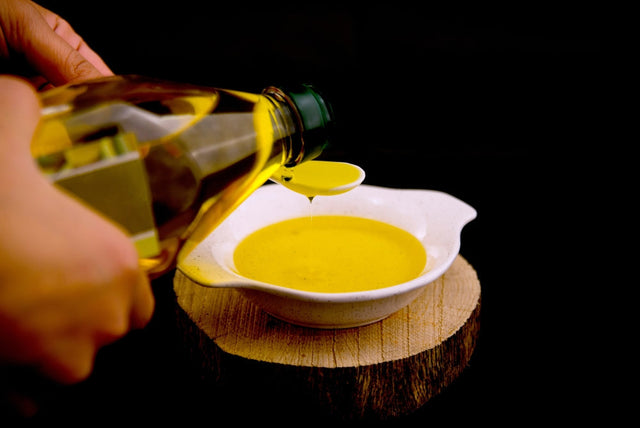
Why Small Greek Farms Produce Higher-Quality Olive Oil
In the global food industry, the prevailing logic is that bigger is better. Bigger farms mean economies of scale, massive machinery, lower costs, and...
Read →
Koroneiki Olive Oil: What Makes This Greek Cultivar Distinct
Koroneiki is a Greek olive cultivar grown primarily for oil production. Its small fruit can produce intensely aromatic extra virgin olive oil with green,...
Read →
What “PDO” and “PGI” Mean on Greek Olive Oil
PDO and PGI labels appear on foods whose names are closely connected to a particular place. On Greek olive oil, these European Union designations...
Read →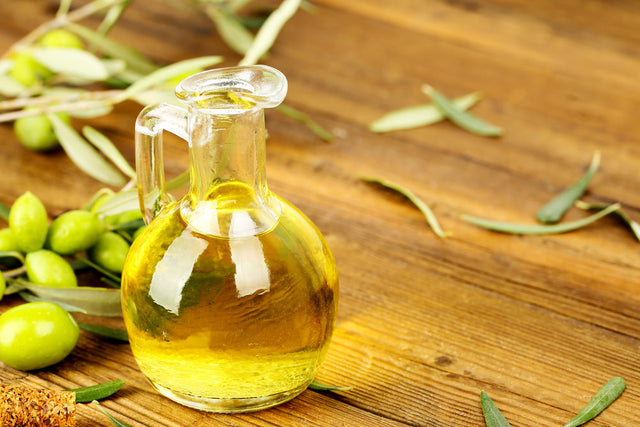
Why Greece Produces the Highest Percentage of Extra Virgin Olive Oil
In the global marketplace of olive oil, there is a statistic that often shocks consumers, chefs, and even industry insiders. It isn't about total...
Read →
The History of Olive Oil in Greece: From Ancient Times to Today
Olive oil has been part of life in Greece for thousands of years. It has moved through kitchens, workshops, markets, athletic grounds, religious ceremonies,...
Read →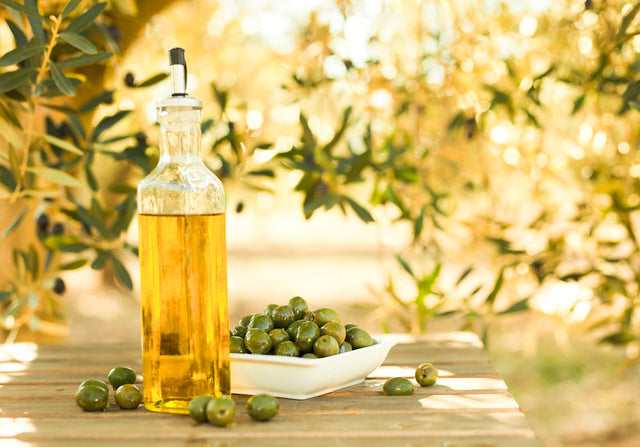
Authentic Green Olive Oil and the Mediterranean Diet: A Perfect Match
The Mediterranean diet isn't just a meal plan; it is a lifestyle that has captivated the world with its promise of longevity, vitality, and...
Read →
How Climate Change Is Affecting Olive Groves — Why Traceability Matters
Olive trees have long symbolized resilience, but even these ancient survivors are feeling the effects of a changing climate. Around the Mediterranean and beyond,...
Read →
The Mediterranean Diet and Authentic Olive Oil: Where Science Meets Tradition
The Mediterranean diet is celebrated as one of the world’s healthiest ways of eating, but to call it a diet is to miss...
Read →
Travel vs. Virtual: What Visiting a Greek Olive Grove Taught Us About Authenticity
There’s something sacred about standing among ancient olive trees in Greece. You can almost taste the history in the air and understand why true...
Read →
Sustainability in Olive Oil: Why You Should Care & How O-Liv Is Leading
Every bottle of olive oil holds a story—of the soil, the sun, and the hands that tend the ancient trees. But in a world...
Read →
Harvest Season Diary: What’s Happening in the O-Liv Grove Now
Every autumn, as the first light hits the hills of Greece, the ancient olive trees begin to shimmer—a quiet signal that the harvest season...
Read →
How Pomoni Partners with Growers & Farms to Ensure Authenticity and Quality
Every drop of Pomoni begins long before the lab—it starts in the groves. In the hills of Greece, where sunlight meets the sea breeze,...
Read →
Sustainable Olive Oil: Traceability, Farming and Proof
Sustainable olive oil begins with the land, but it does not end there. Soil management, water use, biodiversity, harvesting, milling, packaging, transport, traceability, and...
Read →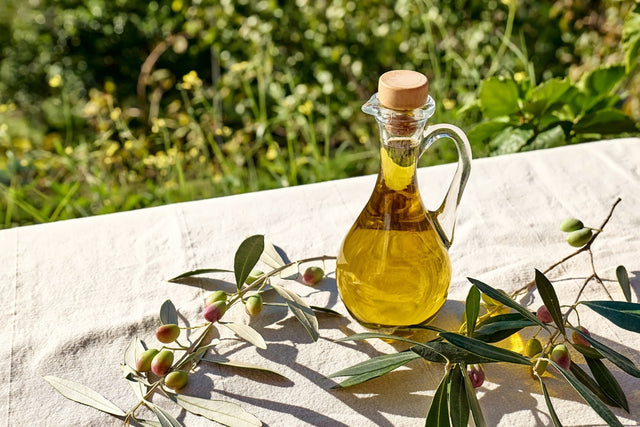
The Milling Process at Pomoni: How We Keep Things 100% Natural and Pure
When people think about olive oil, they usually imagine the grove—the trees, the sun, the harvest. But the real magic happens after the olives...
Read →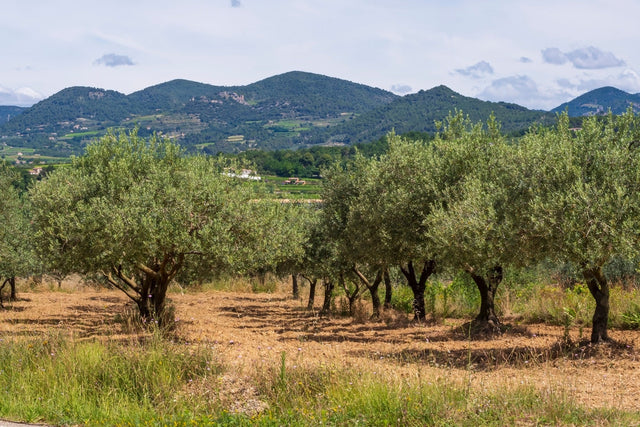
Meet the Farm: The Journey of Pomoni Olives from Grove to Bottle
There’s something special about where Pomoni begins—in the quiet hillsides of Greece, where sunlight, sea breeze, and ancient olive trees have shared the same...
Read →
Does Olive Oil Origin Matter? Greece, Italy, Spain & California
Olive oil reflects where its olives were grown, but country of origin is not a quality ranking. Greece, Italy, Spain, and California all produce...
Read →Cooking and living with olive oil
Recipes, pairings, frying, finishing and the Mediterranean diet.
The Mediterranean Lifestyle: Why Food Alone Isn’t Enough
The Mediterranean lifestyle is often reduced to a list of foods: vegetables, beans, whole grains, fish, nuts, and extra virgin olive oil. Those foods...
Read →
Cretan Lifestyle: Mediterranean Tradition & Modern Applications
For centuries, the people of Crete quietly lived out one of the most powerful health interventions the world has ever studied. They ate generously....
Read →
How to Choose Olive Oil for Cooking vs Drizzling
Walking down the olive oil aisle can feel like navigating a maze. The shelves are packed with bottles of every shape, size, and shade...
Read →
Olive Oil Pairings: What Foods Bring Out the Best Flavor
Most of us have a bottle of olive oil in the pantry. We use it to sauté onions, grease a baking sheet, or perhaps...
Read →
How Greeks Use Olive Oil Daily (Not Just for Salads)
When most people think of Greek olive oil, the first image that comes to mind is often a generous drizzle over a fresh, crisp...
Read →
Why Real Olive Oil Elevates Simple Dishes
In the world of cooking, certain ingredients possess a transformative power, an ability to take a dish from mundane to memorable with just a...
Read →
Finishing vs Cooking Olive Oil: What’s the Difference?
Walk down the olive oil aisle of any well-stocked market, and you will see a dizzying array of choices. Bottles vary in size, shape,...
Read →
Olive Oil Mistakes That Ruin Flavor and Nutrition
Extra virgin olive oil is a pillar of healthy eating and gourmet cooking. This liquid gold, celebrated for its complex flavors and profound health...
Read →
Can You Fry With Extra Virgin Olive Oil?
Can You Fry With Extra Virgin Olive Oil? The debate over cooking fats is a persistent one in the culinary world, and few topics...
Read →
Best Ways to Use Greek Olive Oil in Cooking
Greek olive oil is more than just a cooking fat; it's a cornerstone of Mediterranean culture, a symbol of health, and a liquid gold...
Read →
Why Olive Oil Is a Cornerstone of the Mediterranean Diet
Picture a sun-drenched terrace overlooking the Aegean Sea. On the table sits a spread of fresh tomatoes, feta cheese, warm bread, grilled fish, and...
Read →
The Best Ways to Use Authentic Green Olive Oil: Cooking, Supplements & More
You’ve likely heard about the "liquid gold" of the Mediterranean. Maybe you’ve even invested in a bottle of authentic, high-phenolic green olive oil, drawn...
Read →WHERE TO START
From a named Greek grove, dated.
Pomoni's olive oil is early-harvest Koroneiki from small groves, milled within hours, with the harvest month on the bottle and the HPLC certificate online.
Shop the olive oil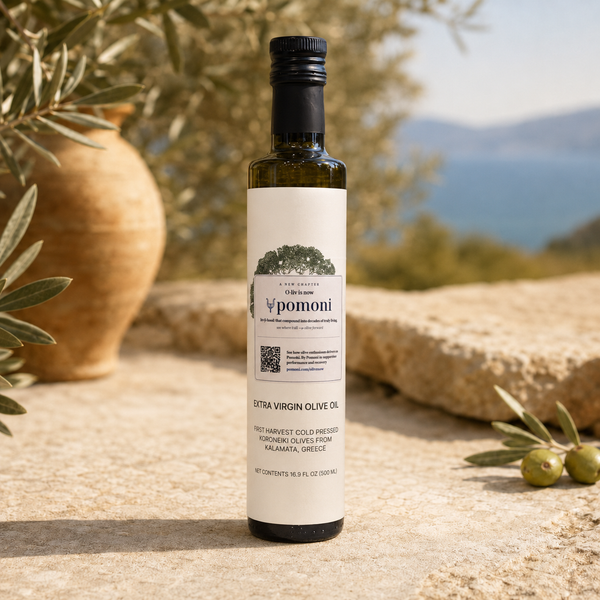
High Phenolic Olive Oil From Greece
From $29.00

Verified olive polyphenols - from a single Greek grove, proven batch by batch. Prove it, then sell it.
O-Liv LLC, doing business as Pomoni · Bettendorf, Iowa
Verified olive polyphenols - from a single Greek grove, proven batch by batch. Prove it, then sell it.
O-Liv LLC, doing business as Pomoni · Bettendorf, Iowa