Imagine biting into a crisp, green apple plucked straight from the tree. It is tart, firm, and bursting with vibrant flavor. Now, imagine biting into an apple that has been sitting in a bowl for three months—soft, mealy, and overly sweet.
This is the difference timing makes in agriculture. Yet, when it comes to olive oil, most consumers completely overlook this crucial factor. We treat olive oil like a pantry staple that lasts forever, similar to salt or vinegar. But olive oil is, in its purest form, fresh fruit juice. It is the oily juice extracted from the olive fruit, and just like orange juice or apple cider, it is highly perishable and deeply influenced by when it was made.
The timing of the harvest is the single most significant variable in determining the quality, flavor, and medicinal potency of the oil. It is the difference between a high-phenolic superfood that fights inflammation and a bottle of yellow fat that simply adds calories to your meal.
This guide explains how harvest timing affects olive oil’s flavor, phenolic content, freshness, and overall quality, from the ripening fruit to the finished bottle.
The Seasonality of the Olive: Understanding the Cycle
To appreciate fresh harvest olive oil, we must first understand the life cycle of the olive tree. The olive harvest in the Northern Hemisphere (where the vast majority of premium oil comes from, including Greece, Italy, and Spain) typically runs from October to January.
This three to four-month window is not uniform. The oil produced in early October is radically different from the oil produced in late January.
The Stages of Ripening (Veraison)
Olive farmers watch the color of the fruit like hawks. This process of changing color is called veraison.
-
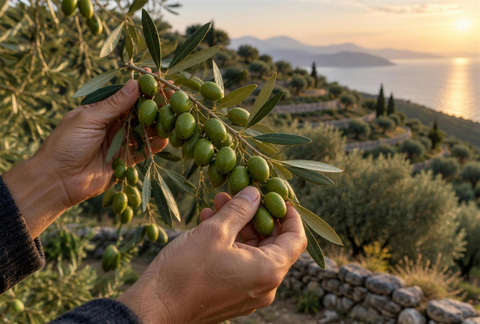
Green Stage (October): The olives are unripe, hard, and bright green. They are firmly attached to the tree.
-
Turning Stage (November): The olives start to turn purple or reddish-brown. The flesh softens slightly.
-
Black Stage (December/January): The olives are fully ripe, black, and soft. They detach easily from the branch.
The "timing" of the harvest is a decision the farmer makes based on what kind of oil they want to produce. It is a trade-off between Quantity and Quality.
Early Harvest vs. Late Harvest: The Great Trade-Off
This is the central tension in the olive oil industry. The decision of when to harvest dictates the economics of the farm and the chemistry of the bottle.
Early Harvest (Agoureleo)
Early harvest olive oil benefits are legendary in the Mediterranean. In Greece, this oil is called Agoureleo (unripe oil). It is made from green, unripe olives picked early in the season (usually October to early November).
Characteristics:
-
Yield: Very Low. Green olives hold onto their oil tightly. It takes many more kilos of green olives to produce one liter of oil compared to black olives. This makes the oil much more expensive to produce.
-
Flavor: Intense. It is robust, grassy, bitter, and very pungent. It delivers a strong "kick" to the back of the throat.
-
Chemistry: This is the peak of nutritional value. Polyphenol levels (antioxidants) are at their absolute highest. Acidity is typically very low.
Late Harvest
This oil is made from fully ripe, black olives, usually harvested in December or January.
Characteristics:
-
Yield: High. As the olive ripens, it loses water and the oil becomes easier to extract. Farmers get much more oil per tree.
-
Flavor: Mild. The oil is golden, buttery, sweet, and nutty. It lacks the bitterness and the green bite.
-
Chemistry: Nutritional value drops significantly. As the fruit ripens, the polyphenols degrade. The acidity levels often rise as the fruit softens and begins to break down on the tree.
Later harvesting produces more oil with a milder flavor, while early harvesting produces less oil with greater bitterness, pungency, and phenolic concentration. The choice reflects a trade-off between higher yield and a more intense chemical and sensory profile.
The Chemistry of Timing: Chasing Polyphenols
High-phenolic olive oil begins with olives harvested while they are still green and naturally rich in protective compounds. Testing the finished oil provides a measurable way to confirm what harvest timing and careful production have preserved.
The health benefits of olive oil—specifically its ability to reduce inflammation, protect LDL cholesterol, and support brain health—are largely attributed to phenolic compounds. The two superstars are Oleocanthal (anti-inflammatory) and Oleacein (antioxidant).
The Polyphenol Curve
Imagine a graph.
-
Start of Season (Green Olives): The line for polyphenols is at its peak. The fruit is stressed and producing these compounds to protect itself.
-
Middle of Season (Turning Olives): The line begins to dip. The oil content increases, but the phenols decrease.
-
End of Season (Black Olives): The line flatlines. You have plenty of fat, but very few antioxidants.
The "Freshness" Clock: From Tree to Bottle to You
Timing isn't just about when you pick the olive; it's also about how fast you process it and how long it has been sitting in a bottle.
Freshness is not measured only by the time since bottling. An oil may have been bottled recently but already affected by delayed milling, heat, oxygen, light, or poor storage. True freshness depends on how well the oil’s flavor, aroma, and phenolic compounds have been protected throughout production.
The Race to the Mill
Once an olive is picked, it starts to die. It is cut off from the tree's life support. Enzymes begin to break down the cell walls, and oxidation begins.
-
High Quality: Olives are pressed within 4 to 24 hours of harvest. This locks in the freshness and keeps acidity low.
-
Low Quality: Olives sit in bins or piles for days. They begin to ferment (heating up naturally), which destroys flavors and creates defects like "fustiness."
The Harvest Date vs. The "Best By" Date
This is the biggest trick in the grocery store. Most bottles have a "Best By" date. This date is usually 18 to 24 months after bottling.
But when was it bottled?
Oil can sit in a massive steel tank for a year before it is bottled. So, a bottle you buy today with a "Best By" date two years from now could actually be made from olives harvested three years ago.
To ensure you are getting fresh harvest olive oil, you must look for a specific Harvest Date (e.g., "Harvest 2023/2024"). If a bottle doesn't have a harvest date, it’s a red flag. It suggests the producer doesn't want you to know how old the oil really is.
The "Olio Nuovo" Phenomenon: Celebrating the New Oil
In Italy and Greece, the arrival of the Olio Nuovo (New Oil) is a cause for celebration. It occurs right after the first pressing in late autumn.
This oil is unlike anything else. It is opaque, neon green, and incredibly spicy. It is meant to be consumed immediately—within a few months. It is a seasonal food, like strawberries in June or asparagus in April.
However, exporting this "freshness" to the rest of the world is a logistical nightmare.
-
Shipping Time: By the time the oil travels by sea to the US, sits in customs, and reaches a warehouse, the peak freshness window is already closing.
-
Shelf Stability: That ultra-fresh oil is unstable. It is sensitive to light and heat.
This creates a dilemma for the health-conscious consumer in America. You want the benefits of early harvest olive oil, but the supply chain makes it difficult to get truly fresh product year-round.
The Oxidation Problem: Why "Fresh" Fades Fast
Even if you manage to buy a bottle of premium, early-harvest oil with a recent harvest date, you face one final hurdle: Oxidation.
As soon as you crack the seal on that bottle, you let oxygen in. Oxygen is the enemy of polyphenols.
-
Week 1: The oil is potent and spicy.
-
Week 4: The flavor softens.
-
Week 12: Much of the initial polyphenol content has degraded. The "burn" at the back of the throat (the sign of Oleocanthal) diminishes.
Scientific studies show that even high-quality EVOO loses a significant percentage of its bioactive compounds within months of opening, especially if stored in a clear bottle or near a stove.
Protecting Freshness from Mill to Bottle
Harvest timing creates the oil’s potential, but careful handling determines how much of that quality reaches the bottle.
Rapid Milling
Once harvested, olives should reach the mill quickly. Delays allow fermentation and oxidation to begin, which can weaken the oil’s aroma and create flavor defects.
Low-Temperature Extraction
Cold extraction helps preserve the olive’s aromatic and phenolic compounds. Controlling temperature during milling prevents unnecessary damage to the qualities created during the growing season.
Protection from Oxygen and Light
After extraction, the oil should be protected from air, light, and heat. Airtight storage and dark packaging help slow oxidation and preserve freshness through bottling and use.
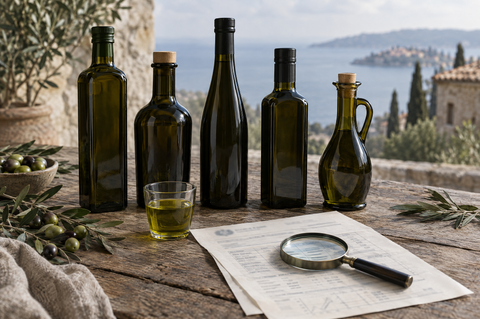
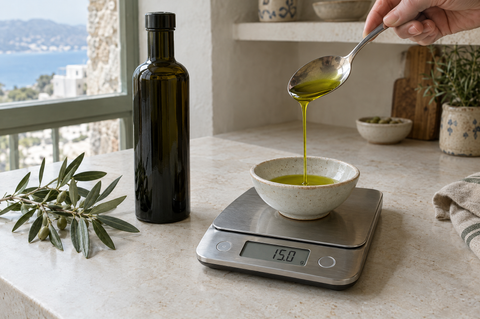
Batch Testing
Pomoni verifies every batch through HPLC testing. These results provide a measurable record of the phenolic content preserved through harvesting, extraction, storage, and bottling.
The Culinary Impact of Freshness
Early-harvest olive oil has a pronounced bitterness, fruitiness, and peppery finish. These qualities are easiest to appreciate when the oil is used raw, but high-quality extra virgin olive oil can also be used for sautéing, roasting, and baking.
When to Use Fresh Early-Harvest Oil
Use it as a finishing oil over soups, vegetables, grilled meat, fish, pasta, or bread when you want its flavor to remain noticeable. It also works well in dressings, dips, and salads.
When to Choose a Milder Oil
A milder oil may be preferable in cakes, delicate sauces, or dishes where a strong peppery flavor would compete with the other ingredients. The choice depends on the flavor you want, not on a rule that early-harvest oil cannot be heated.
Why Every Harvest Tastes a Little Different
Fresh olive oil is an agricultural product, so its flavor shifts from year to year. Three things drive most of the change:
The growing season: a wet year can give plump fruit and a milder, fruitier oil, while a dry year usually cuts yield and can give a more bitter, pungent oil. Heat, frost and even the direction a slope faces change how quickly the fruit ripens.
The cultivar: some varieties, such as Arbequina, are naturally mild; others, such as Picual and Greek Koroneiki, tend toward robust, peppery oils. Even within one variety, the grassy, herbal or floral notes move with the season.
The producer's timing: a grower may pick earlier after a wet autumn or wait after a cool summer, and each choice changes the profile.
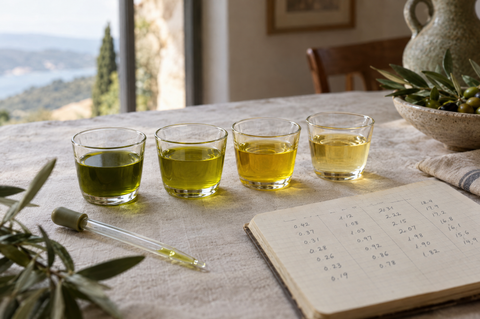
The best way to enjoy the variation is to taste each new bottle neat from a small glass before you cook with it. If the new harvest is intensely bitter and peppery, use it to finish hearty dishes such as grilled meat, aged cheese or roasted roots. If it is softer and fruitier, use it for baking, delicate fish or simple salads.
Identifying Freshness by Taste
You don't always need a lab report to tell if an oil is fresh. Your palate is a sophisticated tool. Here is how to taste for timing:
Signs of Fresh, Early Harvest Oil
-
Aroma: Smells like fresh-cut grass, tomato vine, green herbs, or green apple. It should smell "alive."
-
Taste: Bitter on the sides of the tongue.
-
Sensation: A distinct peppery burn or scratchiness in the throat (pungency). This is the hallmark of freshness and health.
Signs of Old or Late Harvest Oil
-
Aroma: Smells like ripe banana, cooked vegetables, or nothing at all.
-
Taste: Sweet, buttery, greasy.
-
Sensation: Smooth. No burn. No cough.
-
Defects (Too Old): If it smells like crayons, old walnuts, or play-dough, it is rancid. Throw it away.
Why High-Phenolic Oil Costs More
You might notice that fresh harvest olive oil, particularly early harvest, carries a higher price tag. This is basic agricultural economics tied to timing.
-
Lower Yields: As mentioned, green olives yield less oil. It takes approx. 7-10 kg of green olives to make 1 liter of oil, versus 4-5 kg of ripe olives.
-
Harder Labor: Green olives are firmly attached to the tree. Harvesting them requires more mechanical force or hand labor compared to ripe olives that fall easily.
-
Speed: The requirement to rush olives to the mill within hours adds logistical costs.
Early-harvest olives produce less oil and require more fruit to create the same volume. The higher price reflects the lower yield, shorter harvesting window, careful processing, and testing needed to preserve and verify the oil’s phenolic content.
The Global Harvest Calendar
If you are a serious consumer of fresh oil, it helps to know global geography. Olive oil timing flips depending on the hemisphere.
-
Northern Hemisphere (Europe, California): Harvest is Oct-Jan. The freshest oil arrives in US stores around Feb-April.
-
Southern Hemisphere (Australia, Chile, South Africa): Harvest is April-July. The freshest oil arrives in US stores around Aug-Oct.
Smart chefs rotate their oils based on the season to ensure they are always using oil that was crushed within the last 6 months.
Key Takeaways: How to Buy Smart
-
Look for a clearly stated harvest date, not only a best-by date.
-
Choose early-harvest oil when you want a stronger flavor and higher phenolic concentration.
-
Expect fresh oil to taste fruity, bitter, and peppery rather than flat or greasy.
-
Check available testing results instead of relying only on marketing terms.
-
Protect the oil from heat, light, and air after opening.
Conclusion: Respect the Fruit
Olive oil is a seasonal product shaped by ripeness, weather, harvest timing, and the speed of processing. Early harvesting produces less oil, but it can preserve the bitterness, pungency, aroma, and phenolic compounds associated with fresh green olives.
The harvest date tells you when that process began. Careful milling, protective storage, and batch testing help show how well the oil’s original quality was preserved before it reached your kitchen.