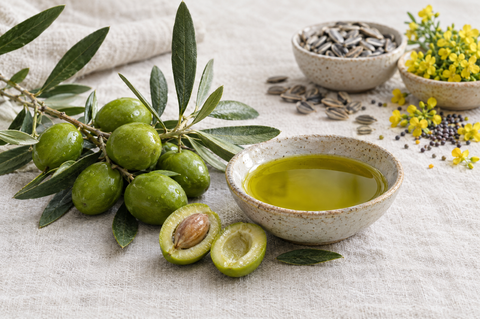
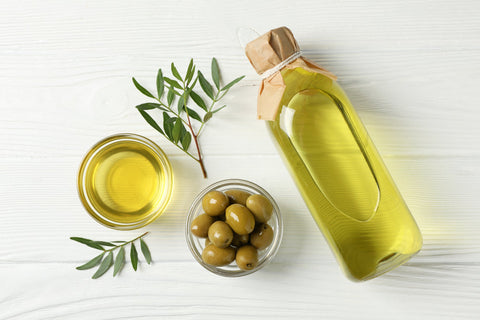
Extra virgin olive oil (EVOO) is the top grade of olive oil: juice of fresh olives, separated by mechanical means only, with no heat treatment, solvents or refining, that passes both a chemistry test and a professional tasting panel. To qualify it needs free acidity of 0.8% or less, a fruity taste and zero defects. "Olive oil" without "extra virgin" on the label is usually a blend of refined olive oil with a little virgin oil, and has far fewer polyphenols and much less flavour.
What does "extra virgin" actually mean?
"Extra virgin" is a legal grade, not a marketing word. The International Olive Council (IOC) trade standard and EU law both define it. Three things have to be true:
- Mechanical extraction only. The oil comes from olives by crushing and separating, under temperatures that do not alter it. No chemical solvents, no refining, no mixing with other oils.
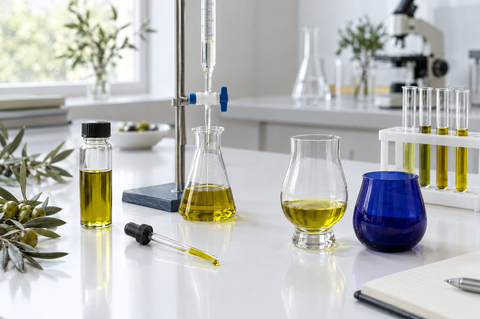
- Chemistry within limits. Free acidity of 0.8% or less, plus limits on oxidation (peroxide value and UV absorbance) and on markers of adulteration such as waxes, sterols and fatty acids.
- A clean taste. A trained panel must find some fruitiness and no defects at all: nothing musty, fusty, winey or rancid.
Fail any one of those and the oil is not extra virgin, however it is labelled.
The olive oil grades, from best to lowest
| Grade | How it is made | Free acidity | Taste |
|---|---|---|---|
| Extra virgin olive oil | Mechanical extraction only | ≤ 0.8% | Fruity, zero defects |
| Virgin olive oil | Mechanical extraction only | ≤ 2.0% | Fruity, slight defects allowed |
| Lampante virgin oil | Mechanical, but defective | > 2.0% | Not fit to eat until refined |
| Refined olive oil | Lampante oil, chemically and thermally refined | ≤ 0.3% | Almost none |
| "Olive oil" (also "pure" or "classic") | Refined olive oil blended with virgin oil | ≤ 1.0% | Mild |
| Olive pomace oil | Solvent-extracted from the leftover paste, refined, blended | ≤ 1.0% | Neutral |
"Light" or "extra light" olive oil is not a separate grade. In the US it describes a lighter colour and flavour, not fewer calories; it is mostly refined oil. Every grade has about 120 calories per tablespoon.
Olive oil vs extra virgin olive oil: what's the difference?
| Extra virgin olive oil | "Olive oil" / "pure" / "light" | |
|---|---|---|
| Processing | Crushed and separated, nothing else | Mostly refined with heat and chemicals, then blended |
| Polyphenols | Kept; often 150 to over 500 mg/kg | Mostly removed by refining |
| Flavour | Fruity, often bitter and peppery | Mild to neutral |
| Fat and calories | About 120 kcal per tablespoon, mostly oleic acid | The same |
| Best for | Everything, especially raw use | Cooking where you want no olive taste |
| Price | Higher | Lower |
The difference that matters most is what refining removes. The fat is the same, but refining strips out the polyphenols, vitamin E and aroma compounds that come with fresh-pressed oil. Our guide to polyphenol levels in olive oil has the numbers, and how olive oil is made shows where refining fits.
Is extra virgin olive oil the same as cold pressed?
Not quite. Almost all extra virgin olive oil is made today in a centrifuge, not a press, so in EU law it can say "cold extraction" (below 27 °C) but not "first cold pressing", which is reserved for oil from a traditional hydraulic press. A cold-pressed oil can still fail the extra virgin tests if the fruit was poor. See what cold pressed olive oil means.
How to tell if extra virgin olive oil is real
The label is a claim, not proof. Studies of supermarket oils have repeatedly found bottles labelled extra virgin that fail the standard, most often because they are old or oxidised. Look for a recent harvest date, dark glass or tin, a named origin, and a taste that is fresh and peppery rather than flat or waxy. For certainty you need a lab result. Our real olive oil guide walks through the checks.
Frequently asked questions
What does EVOO stand for?
Extra virgin olive oil, the highest grade of olive oil, made by mechanical extraction only and passing chemical and taste tests.
Is olive oil the same as extra virgin olive oil?
No. A bottle labelled just "olive oil" is usually refined olive oil blended with some virgin oil. It has the same fat and calories but far fewer polyphenols and much less flavour.
Is light olive oil healthier?
No. "Light" refers to colour and flavour, not calories. It is mostly refined oil, with about 120 calories per tablespoon like any other olive oil.
What acidity does extra virgin olive oil have?
Free acidity of 0.8% or less, measured as oleic acid. Good oils are often well below that. Acidity is not something you can taste.
Can you cook with extra virgin olive oil?
Yes. It is suitable for everyday cooking, including sautéing and roasting. Many people save the freshest bottle for raw use, where its flavour shows best.
Sources
- International Olive Council. Trade standard applying to olive oils and olive pomace oils, COI/T.15/NC No 3/Rev. 22, 2026. internationaloliveoil.org
- Commission Delegated Regulation (EU) 2022/2104 on marketing standards for olive oil. eur-lex.europa.eu
- USDA Agricultural Marketing Service. United States Standards for Grades of Olive Oil and Olive-Pomace Oil, 2010. ams.usda.gov