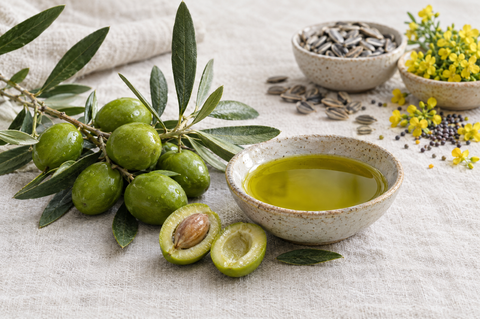
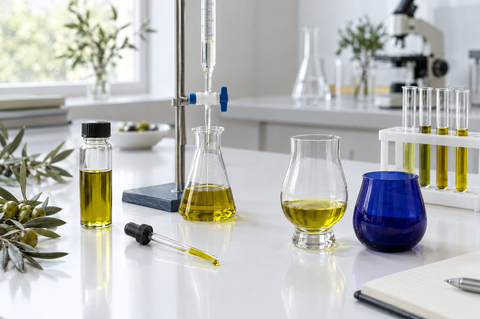
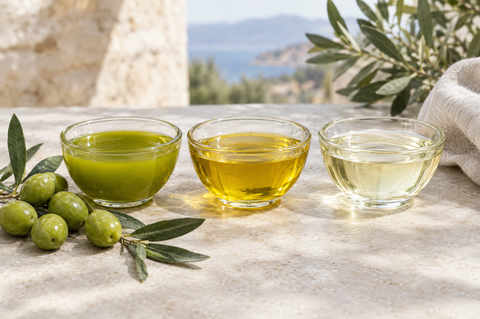
Cold pressed olive oil is oil extracted from olives by mechanical means only, with the olive paste kept below 27 °C (80.6 °F). In EU law, "first cold pressing" is reserved for oil made that way in a traditional hydraulic press, and "cold extraction" for oil made below 27 °C in a modern centrifuge, which is how almost all good extra virgin olive oil is made today. Keeping the paste cool protects aroma and polyphenols, but "cold pressed" alone does not prove an oil is extra virgin, fresh or high in polyphenols.
What is cold pressed olive oil?
It means two things: the oil was separated from the olive paste by mechanical force only, with no chemical solvents, and the paste was not heated above 27 °C during mixing and extraction. Heat gets more oil out of the same olives, which is why it is tempting, but it also drives off aroma and lowers the phenolic compounds that give fresh oil its bitterness and pepper.
The EU regulates the wording on bottles sold there:
| Label term | Allowed only for |
|---|---|
| First cold pressing | Extra virgin or virgin oil obtained below 27 °C from a first mechanical pressing of the paste in a traditional hydraulic press |
| Cold extraction | Extra virgin or virgin oil obtained below 27 °C by percolation or centrifugation of the paste |
| "Cold pressed" (US and elsewhere) | Not separately defined in the US; used loosely for both of the above |
So a modern extra virgin oil made in a centrifuge is, strictly, "cold extracted". There is only one pressing of the paste today, so "first" press is a leftover from when paste was pressed more than once. How olive oil is made walks through each step.
Is cold pressed olive oil better?
It is better than oil made with heat, but the label is a minimum, not a mark of quality. What decides how good the oil is:
- The grade. Only extra virgin olive oil has passed both the chemical tests and a tasting panel. See what extra virgin olive oil is.
- The fruit. Fresh, healthy olives milled within hours matter more than the temperature setting. Green, early-harvest olives give the most polyphenols.
- Freshness. Polyphenols fall after pressing whatever the method, so a recent harvest date matters.
- Proof. A dated lab result tells you more than any process claim.
Cold-Pressed Extra Virgin Olive Oil vs Regular Olive Oil—The Real Differences
The distinction between these two types of oil is significant. It’s not just a matter of taste, but of quality, nutrition, and authenticity.
Here’s a quick comparison:
-
Cold-Pressed Extra Virgin Olive Oil (EVOO):
-
Extraction: Mechanically pressed without heat (below 27°C) or chemicals.
-
Polyphenols: Rich in natural antioxidants like oleocanthal and hydroxytyrosol.
-
Taste: Fresh, fruity, and often with a peppery or bitter finish—a sign of high quality.
-
Nutrients: Retains its natural vitamins (like E and K) and powerful phenolic compounds.
-
Regular Olive Oil (also "Pure" or "Light"):
-
Extraction: Often extracted with heat and/or chemical solvents, then refined.
-
Polyphenols: Contains very few or no polyphenols due to the refining process.
-
Taste: Bland, neutral, and oily, with no distinct character.
-
Nutrients: Most of the natural vitamins and all of the beneficial antioxidants have been destroyed.
What “Extra Virgin” Really Adds
The term "cold-pressed" is often paired with "extra virgin," and for good reason. "Extra Virgin" is a legal grade of olive oil with strict requirements. To qualify, an oil must:
-
Be extracted solely by mechanical means (which includes cold-pressing).
-
Have a "free acidity" level of less than 0.8%. This is a key indicator of the health of the olives and the speed of processing. Lower is better.
-
Be free of any taste or smell defects, as determined by a certified tasting panel.
"Regular" or "pure" olive oils fail on all these fronts. They are refined precisely because they come from poor-quality fruit that would not pass the taste and acidity tests for the extra virgin grade. The "extra virgin" label, when legitimate, is a guarantee of this higher standard of production.
Why Even Cold-Pressed Oils Can Lose Potency Over Time
Choosing a cold-pressed extra virgin olive oil is a great first step, but it doesn't guarantee a potent product. The moment an olive oil is made, its enemies—light, air, and time—begin their assault on its fragile phenolic compounds. Oxidation is a natural process where exposure to oxygen causes the oil to break down and go rancid.
Even the highest-quality, most polyphenol-rich cold-pressed olive oil will lose a significant portion of its potency within a few months of being opened, and even within a year in a sealed bottle. Light, especially UV light, accelerates this degradation, which is why authentic oils are never sold in clear bottles. Heat from improper storage (like next to a stove) will also speed up the decline. This means that by the time a bottle of oil travels across the world and sits on a store shelf for months, its health benefits may already be severely diminished.
The Role of Packaging and Freshness
Proper packaging is a producer’s first line of defense against this decline. Dark glass bottles or opaque metal tins are essential for blocking out light. A harvest date on the label is also critical, as it tells you the true age of the oil.
However, while good packaging helps, it can't stop the natural process of oxidation entirely. As soon as you open the bottle, air gets in and the clock starts ticking even faster on its freshness and phenolic content. This presents a challenge for anyone who wants to get the maximum health benefits from their olive oil. This is why Pomoni pays close attention to every step, from harvest to the way you store your bottle at home.
How Pomoni Protects Phenolics Beyond Cold Pressing
At Pomoni, we start with premium, cold-pressed, high-phenolic olive oil from Greece. We see cold pressing as the starting point, not the finish line: early-harvest olives, fast milling, independent lab testing, and protective dark packaging all play a part.
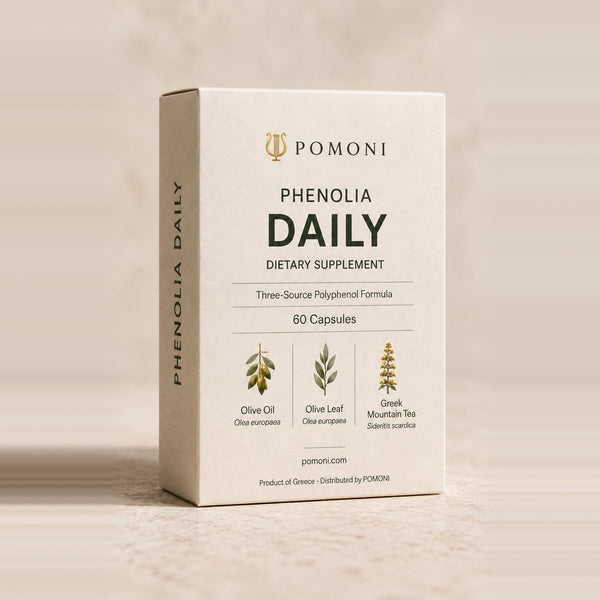
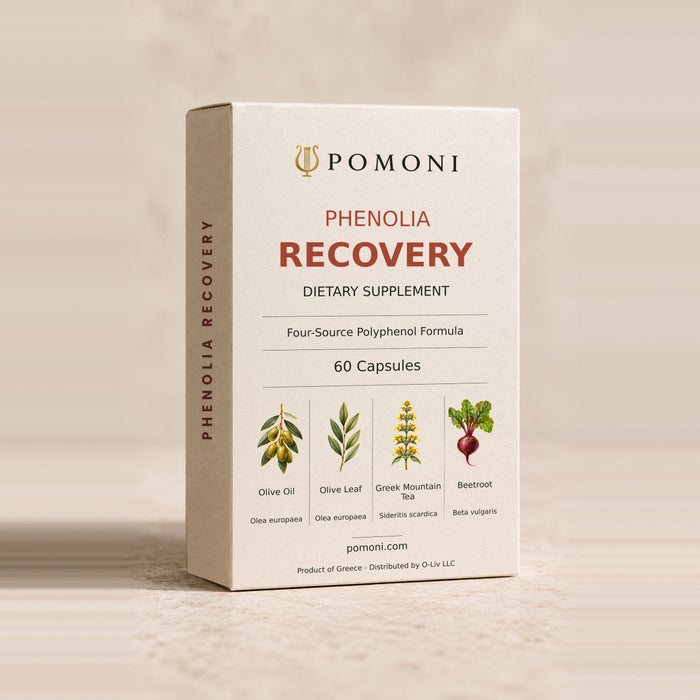
Once a bottle is open, the usual rules apply: keep it cool, dark, and tightly closed, and use it promptly. For people who would rather take their olive polyphenols as a capsule, Phenolia Daily is a plant-based capsule of high-purity Mediterranean olive oil, olive leaf extract, and Greek Mountain Tea, with 12 mg of olive polyphenols per two-capsule serving.
From Fresh Greek Harvests to Your Kitchen
Our process creates an unbroken chain of quality. We connect the ancient Mediterranean tradition of early harvesting in Greece with modern preservation science. We source our authentic, cold-pressed Greek oil and verify its phenolic content through independent lab testing.
Which Olive Oil Should You Choose?
When it comes to choosing an olive oil for its health benefits, the answer is clear: you should always choose an authentic, cold-pressed, high-phenolic extra virgin olive oil. Anything less is a compromise on quality and nutrition. Ideally, you should look for one that is transparent about its lab testing and purity.
To make it easier, follow this simple checklist when you're shopping.
Quick Checklist for Real Olive Oil Quality
-
Cold-Pressed, Not Refined: The label should explicitly state "cold-pressed" or "cold-extracted." Avoid terms like "pure," "light," or "olive oil blend."
-
Harvest and Origin Listed: Look for a specific harvest date and a single country of origin (e.g., "Product of Greece").
-
High Phenolic & Lab-Tested: The best brands are proud of their phenolic content and will mention lab testing as proof of quality.
-
Dark Glass or Protected Capsule Form: The packaging must protect the oil from light and air. Look for dark glass or an opaque tin.
Preserving Phenolics Is Key—Here’s How Pomoni Does It
The core message is simple: the real value of olive oil lies in its phenolic compounds, and preserving them is everything. Cold pressing is the essential first step in this preservation process, but it's not the last. The fight against degradation from light, air, and time continues long after the oil is made.
This is where Pomoni stands apart. We start with early-harvest Greek olives, cold-extract them, test the oil independently, and give you clear storage guidance so the phenolic compounds you pay for are protected.
Experience the Next Generation of Cold-Pressed Olive Oil
Preserving phenolics is key—see how Pomoni does it and experience olive oil reimagined for purity and potency.
These statements have not been evaluated by the FDA. This product is not intended to diagnose, treat, cure or prevent any disease.
Frequently asked questions
What does cold pressed olive oil mean?
It was extracted by mechanical means only, with the olive paste kept below 27 °C. In EU law, "first cold pressing" means a traditional hydraulic press and "cold extraction" means a centrifuge.
Is cold pressed olive oil the same as extra virgin?
No. Cold pressing describes the process. Extra virgin is a grade the oil must earn in lab tests and a tasting panel.
Is cold pressed olive oil better than regular olive oil?
Yes. Regular olive oil is mostly refined with heat and chemicals, which removes most polyphenols and flavour. Cold extraction keeps them, especially in fresh, early-harvest oil.