

Unlock 10% off your first order
Hydroxytyrosol: The Antioxidant Behind the EU Olive Oil Health Claim
Hydroxytyrosol is a small, well-absorbed olive phenol and the compound behind the only EU-authorised health claim for olive oil. It occurs in olive fruit, olive leaf and extra virgin olive oil, both free and bound inside larger compounds. Olive oil polyphenols, measured as hydroxytyrosol and its derivatives, contribute to the protection of blood lipids from oxidative stress. That is the wording the European Union allows on qualifying oils.
What is hydroxytyrosol?
Hydroxytyrosol is a simple phenolic alcohol. Chemists call it a phenylethanoid. It has two hydroxyl groups side by side on its ring, a shape known as a catechol. That shape is what makes it such an efficient antioxidant.
In the olive, most hydroxytyrosol is not free. It sits inside larger secoiridoid molecules, mainly oleuropein and oleacein. When olives are crushed, ripen, or are digested, these larger molecules break apart and release hydroxytyrosol. So the oleuropein in olive leaf and the oleacein in fresh oil are both, in part, carriers of hydroxytyrosol.
On its own, hydroxytyrosol has little taste. The bitterness and pungency of a fresh oil come mostly from the larger compounds that contain it.
Which foods contain hydroxytyrosol?
Almost all dietary hydroxytyrosol comes from the olive tree. How much you get depends on the food and on whether the compound is free or still bound inside larger molecules.
| Food | Form | Notes |
|---|---|---|
| Extra virgin olive oil | Mostly bound, in oleacein and oleuropein-type compounds; free hydroxytyrosol is low | Early-harvest, high-phenolic oils carry the most. Oils that qualify for the EU claim hold at least 250 mg/kg of hydroxytyrosol and its derivatives |
| Table olives | Largely free | Curing breaks down oleuropein and releases hydroxytyrosol, so cured olives are one of the richest food sources |
| Olive leaf | Bound, as oleuropein | Leaf extracts deliver oleuropein, which the body partly converts |
| Olive fruit extracts | Free and bound, standardised | Made from olive fruit or the water phase of oil milling; the form used in most supplement trials |
| Wine | Free, small amounts | Found in red and white wine at far lower levels than in olives |
| Refined olive oil and seed oils | Little or none | Refining strips out most phenolic compounds |
How it works in the body
Hydroxytyrosol donates electrons to free radicals and neutralises them. Because it can mix with both water and fat, it can work in blood plasma and close to fatty particles such as LDL cholesterol. Protecting LDL from oxidation matters, because oxidised LDL is the form that contributes to plaque in artery walls.
It is also well absorbed. After a serving of olive oil, hydroxytyrosol and its metabolites appear in blood and urine in amounts that rise with the dose. In laboratory studies it also switches on the cell's own antioxidant defences, a signalling effect that goes beyond simple scavenging.
What the research shows
The EFSA opinion. The European Food Safety Authority reviewed the evidence and concluded that a cause-and-effect relationship exists between olive polyphenol intake and protection of LDL particles from oxidative damage (EFSA NDA Panel, EFSA Journal, 2011). It set a minimum: 5 mg of hydroxytyrosol and its derivatives per day, supplied by 20 g of olive oil.
The EU regulation. The European Commission then authorised the claim in law (Commission Regulation (EU) No 432/2012). The claim may only be used for olive oil containing at least 5 mg of hydroxytyrosol and its derivatives, such as the oleuropein complex and tyrosol, per 20 g. That works out to roughly 250 mg/kg. Most supermarket extra virgin oils fall below it.
The EUROLIVE trial. In a crossover trial, 200 healthy men took 25 mL a day of three olive oils that differed only in phenolic content (Covas et al., Annals of Internal Medicine, 2006). HDL cholesterol rose in step with phenolic content. Markers of lipid oxidation fell as phenolic content rose. This was the key human evidence behind the EFSA opinion.
Absorption. A human study found that olive oil phenols, including hydroxytyrosol, are absorbed in proportion to the amount eaten (Visioli et al., FEBS Letters, 2000). This supports the idea that a higher-phenolic oil delivers more to the body. For a wider view, see how polyphenols work at a cellular level.
How much is in olive oil and in Phenolia
Free hydroxytyrosol in fresh oil is usually low, often a few mg/kg. The much larger share is bound inside oleuropein-type and oleacein-type compounds. That is why the EU claim counts "hydroxytyrosol and its derivatives" rather than the free molecule alone.
Levels depend on the olive and the process. Early harvest green olives carry more of the parent compounds. The Greek Koroneiki cultivar is known for high secoiridoid content. Quick, cold milling and careful storage slow the losses that come with time, heat and light.
Pomoni tests by HPLC (high-performance liquid chromatography), which separates and measures each compound. That lets us report hydroxytyrosol and its derivatives against the EU benchmark. See HPLC vs NMR for why method matters.
Pomoni High-Phenolic Olive Oil is made from early harvest Koroneiki olives. Phenolia Daily pairs high-purity Mediterranean olive oil and olive leaf extract with Greek Mountain Tea. The current batch certificate on testing and certifications lists the measured figures. More on the heart link is on our cholesterol page.
Related compounds
Frequently asked questions
What is the EU health claim for olive oil polyphenols?
The authorised wording is that olive oil polyphenols contribute to the protection of blood lipids from oxidative stress. It applies only to oil with at least 5 mg of hydroxytyrosol and its derivatives per 20 g, with a daily intake of 20 g.
Is hydroxytyrosol the same as total polyphenols?
No. Total polyphenols is a broader figure that includes many compounds. The EU claim counts hydroxytyrosol plus the compounds that contain it, such as oleuropein, oleacein and tyrosol.
Is hydroxytyrosol well absorbed?
Yes. Human studies show it reaches the blood and is excreted in amounts that rise with intake. Its small size and ability to mix with fat and water both help.
Does olive leaf contain hydroxytyrosol?
Olive leaf is rich in oleuropein, which breaks down into hydroxytyrosol. Leaf extracts therefore supply hydroxytyrosol mostly in bound form.
These statements have not been evaluated by the Food and Drug Administration. Pomoni products are not intended to diagnose, treat, cure or prevent any disease.
Sources
- EFSA Panel on Dietetic Products, Nutrition and Allergies. Scientific Opinion on the substantiation of health claims related to polyphenols in olive and protection of LDL particles from oxidative damage. EFSA Journal. 2011;9(4):2033. doi:10.2903/j.efsa.2011.2033
- Commission Regulation (EU) No 432/2012 establishing a list of permitted health claims made on foods. Official Journal of the European Union. 2012. eur-lex.europa.eu
- Covas MI, Nyyssonen K, Poulsen HE, et al. The effect of polyphenols in olive oil on heart disease risk factors: a randomized trial. Annals of Internal Medicine. 2006;145(5):333-341. doi:10.7326/0003-4819-145-5-200609050-00006
- Visioli F, Galli C, Bornet F, et al. Olive oil phenolics are dose-dependently absorbed in humans. FEBS Letters. 2000;468(2-3):159-160. doi:10.1016/s0014-5793(00)01216-3
More polyphenol science
Do Olive Polyphenols Deliver Clinical Benefits?
“Clinical benefits” is a high bar, and it should be. In nutrition, that phrase doesn’t mean dramatic results or guaranteed outcomes. It refers to...
Read →
What the PREDIMED Trials Really Proved About Extra Virgin Olive Oil
For decades, conventional nutrition advice treated dietary fat as something to minimize. Mediterranean cultures offered a different model, with extra virgin olive oil used...
Read →
How Polyphenols Work at a Cellular Level
For decades, the conversation around nutrition has focused heavily on macronutrients—proteins, fats, and carbohydrates—or essential vitamins and minerals. While these are vital building blocks,...
Read →
How Olive Oil Is Tested: Purity, Freshness, and Polyphenols
Olive oil is tested in a lab in two ways: chemical analysis and a trained tasting panel. The chemistry measures freshness and oxidation (free...
Read →
Olive Oil As Medicine The Effect On Blood Lipids And Lipoproteins
Key Takeaways: Just 2 tablespoons of extra virgin olive oil (EVOO) a day can improve cholesterol levels and lower heart disease risk. EVOO...
Read →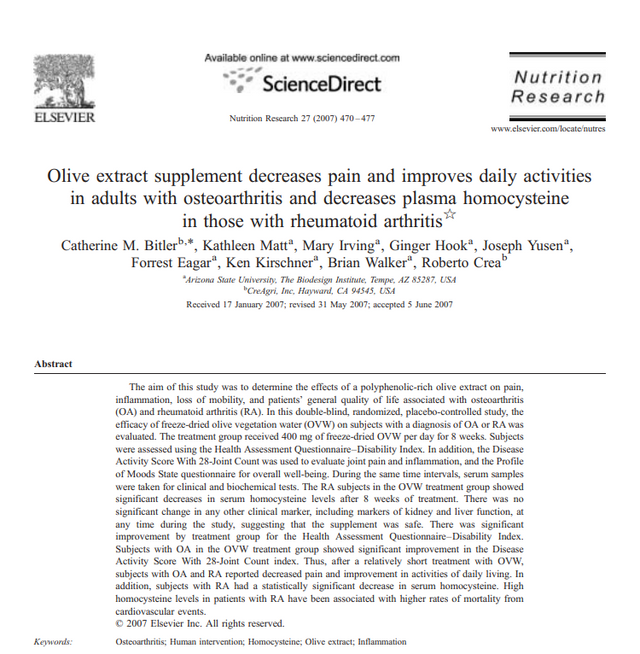
Olive extract supplement decreases pain and improves daily activities in adults with osteoarthritis and decreases plasma homocysteine in those with rheumatoid arthritis
Key Takeaways: Olive extract supplements improved daily activities and reduced pain in people with osteoarthritis (OA). In rheumatoid arthritis (RA) patients, the supplement...
Read →WHERE TO START
The research is the easy part.
Phenolia Daily puts the compounds this page describes into a two-capsule daily serving: high-purity Mediterranean olive oil, olive leaf and Greek Mountain Tea, with the source-oil certificates published.
Shop Phenolia Daily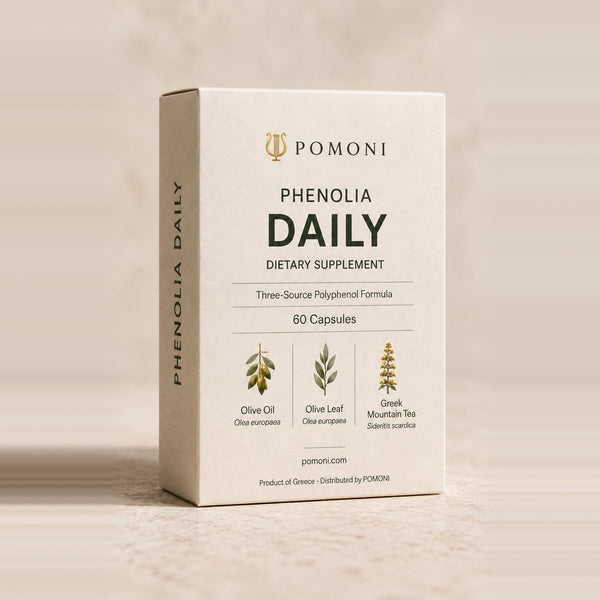
Phenolia Daily — Olive Polyphenol Supplement, 60 Capsules
From $45/box with Subscribe & Save


Verified olive polyphenols - from a single Greek grove, proven batch by batch. Prove it, then sell it.
O-Liv LLC, doing business as Pomoni · Bettendorf, Iowa
Verified olive polyphenols - from a single Greek grove, proven batch by batch. Prove it, then sell it.
O-Liv LLC, doing business as Pomoni · Bettendorf, Iowa