Mediterranean recipes for military members need to be cheap, quick, easy to batch-cook and safe to keep for a few days, often in a barracks room with a microwave and a small fridge. The six recipes below meet that brief: a sheet-pan chicken that covers four meals, a no-cook chickpea and tuna salad, a one-pot Greek lentil soup, a 10-minute egg and tomato skillet, a yogurt breakfast bowl and a chicken pita wrap. Each uses extra virgin olive oil as the main fat, beans or lean protein at every meal, and plenty of vegetables, the core of the Mediterranean pattern.
Does the Mediterranean diet fit Army H2F guidance?
Closely. The Army's Holistic Health and Fitness field manual, FM 7-22, bases a soldier's everyday eating on the Dietary Guidelines for Americans. It encourages more whole grains, fruit and vegetables, legumes, nuts, seeds, dairy and fish, and less processed grain, added sugar and processed meat. For fats, it favours oils high in monounsaturated and polyunsaturated fats and names olive oil among them. That is close to a description of a Mediterranean plate. Our guide to Army H2F and its nutrition pillar covers the manual's targets for fuelling and recovery.
What makes a good recipe for service members?
- It works with little equipment. Many barracks rooms have only a microwave and a mini fridge, and rules on hot plates and air fryers vary by installation. Three of the recipes below need no stove at all.
- It batch-cooks. One cooking session should cover several meals. Cooked leftovers keep 3 to 4 days in the fridge (FoodSafety.gov), so cook twice a week rather than once.
- It uses shelf-stable staples. Canned chickpeas, lentils, canned tomatoes, pouch tuna and olive oil keep for months and cost little at the commissary.
- It carries well. Food that tastes fine cold travels to the motor pool, the range or a long day in the office.
1. Sheet-pan lemon-oregano chicken and potatoes (4 meals)
Makes 4 servings. Needs an oven. 10 minutes prep, 40 minutes cooking.
- 1 kg (2.2 lb) boneless, skinless chicken thighs
- 900 g (2 lb) potatoes, cut into wedges
- 1 red onion, cut into wedges
- 4 tablespoons extra virgin olive oil
- 2 lemons: juice of both, zest of one
- 3 garlic cloves, crushed
- 2 teaspoons dried oregano, salt and black pepper
- Heat the oven to 220 °C (425 °F).
- Toss everything together on a large sheet pan, spreading it out in one layer.
- Roast for 35 to 40 minutes, turning once, until the potatoes are golden and the chicken reaches 74 °C (165 °F) inside.
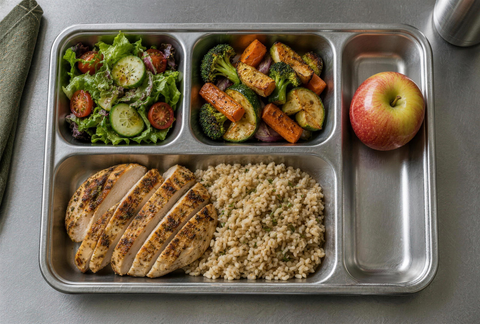
- Split into four containers with a handful of salad leaves or cucumber in each. Refrigerate within 2 hours.
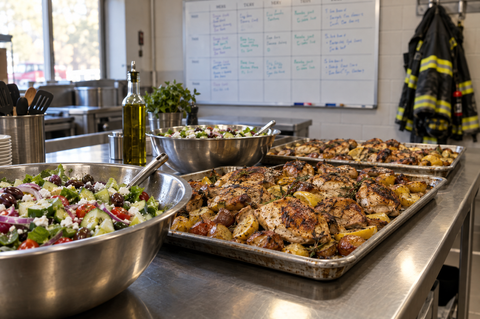
Save one portion of chicken for the pita wraps in recipe 6. For a whole-crew version of the same idea, see our rotisserie chicken with lemon, mustard and olive oil sauce.
2. No-cook chickpea and tuna salad
Makes 2 servings. No stove. 10 minutes.
- 1 can (15 oz / 400 g) chickpeas, drained and rinsed
- 1 can or pouch (5 oz / 140 g) tuna, drained
- ½ cucumber and a handful of cherry tomatoes, chopped
- ¼ red onion, finely chopped
- 2 tablespoons extra virgin olive oil and 1 tablespoon red wine vinegar or lemon juice
- Dried oregano, salt and pepper; 50 g (2 oz) crumbled feta if you have it
Mix everything in a bowl and season to taste. It keeps 2 days in the fridge and is better on day two. Swap the tuna for pouch salmon or two boiled eggs.
3. Greek lentil soup (fakes)
Makes 6 servings. One pot on a stove, or a slow cooker on low for 6 to 8 hours. 45 minutes.
- 500 g (1 lb) brown or green lentils, rinsed
- 1 onion, 2 carrots and 3 garlic cloves, chopped
- 1 can (14 oz / 400 g) crushed tomatoes
- 2 bay leaves and 1 teaspoon dried oregano
- 2 litres (8 cups) water
- 4 tablespoons extra virgin olive oil, plus red wine vinegar to serve
- Put everything except the olive oil and vinegar in a large pot. Bring to the boil, then simmer, partly covered, for 35 to 45 minutes until the lentils are soft.
- Take off the heat, remove the bay leaves, stir in the olive oil and season with salt.
- Serve with a splash of vinegar and bread. Freeze portions you will not eat within 3 days.
Lentils are cheap, high in fibre and a good source of plant protein. In Greece this is a standard weeknight meal, and the olive oil goes in at the end so its flavour stays fresh.
4. Eggs with tomato and feta (strapatsada)
Makes 1 serving. One pan, 10 minutes, where a hot plate or kitchen is allowed.
- 2 tablespoons extra virgin olive oil
- 2 ripe tomatoes, grated on a box grater (skins thrown away), or ½ can crushed tomatoes
- 3 eggs, beaten
- 40 g (1½ oz) feta, crumbled; dried oregano and pepper
Warm the oil in a pan, add the tomato and cook for 4 to 5 minutes until thick. Pour in the eggs and stir gently until just set. Top with the feta and oregano and eat with bread. For a no-cook breakfast, try egg, tomato and feta toast made with eggs boiled ahead.
5. Greek yogurt breakfast bowl
Makes 1 serving. No stove. 2 minutes.
- 200 g (¾ cup) plain Greek yogurt
- 30 g (a small handful) walnuts or almonds
- 1 piece of fruit, or a handful of berries or dried figs
- 1 teaspoon honey
Combine and eat, or pack in a jar the night before. Plain Greek yogurt gives more protein than most flavoured yogurts and lets you control the sugar.
6. Chicken pita wraps with quick tzatziki
Makes 2 wraps. No stove if you use the chicken from recipe 1. 10 minutes.
- 1 portion of cooked chicken from recipe 1, sliced
- 2 whole-wheat pitas or flatbreads
- Lettuce, tomato and red onion
- For the tzatziki: 150 g (⅔ cup) Greek yogurt, ½ cucumber (grated and squeezed dry), 1 small garlic clove (crushed), 1 tablespoon extra virgin olive oil, 1 teaspoon lemon juice or vinegar, salt
Stir the tzatziki together. Warm the pitas for 20 seconds in the microwave if you like, then fill with chicken, salad and tzatziki. The tzatziki keeps 3 days in the fridge.
A sample week of meal prep
| When | Cook or prepare | It covers |
|---|---|---|
| Sunday | Sheet-pan chicken (recipe 1) and lentil soup (recipe 3) | Four chicken meals and six soup servings, some frozen |
| Each morning | Yogurt bowl (recipe 5) | Breakfast in 2 minutes |
| Wednesday | Chickpea and tuna salad (recipe 2) and tzatziki | Two lunches and the wraps |
| Any day | Strapatsada (recipe 4) or chicken pita wraps (recipe 6) | A fast dinner from what is left |
A shopping list for the week: chicken thighs, potatoes, lentils, two cans of chickpeas, pouch tuna, canned tomatoes, eggs, Greek yogurt, feta, cucumbers, tomatoes, onions, lemons, garlic, salad leaves, fruit, nuts, pitas and one bottle of extra virgin olive oil.
What travels well for the field or a long duty day?
When you cannot heat food, pick items that are safe at room temperature for a day and still give you protein and fat:
- Pouch tuna or salmon, and whole-grain crackers or pita
- Unsalted nuts and dried fruit such as figs, dates or apricots
- Olives in single-serve pouches
- Whole fruit that bruises little, such as apples and oranges
- Hard cheese for a day, wrapped
For the rules on supplements, which matter more for service members than for most people, see our guide to OPSS and the DoD prohibited supplements list.
Frequently asked questions
Can you meal prep Mediterranean food in the barracks?
Yes. With a microwave and a mini fridge you can make the chickpea and tuna salad, the yogurt bowl and the chicken wraps, and reheat soup or chicken cooked in a shared kitchen. Cook twice a week, since cooked leftovers keep 3 to 4 days in the fridge.
Does the Mediterranean diet give enough protein for military training?
It can. Chicken, fish, eggs, Greek yogurt, cheese, lentils and chickpeas are all part of it. Build each meal around one of them, as the recipes here do. FM 7-22 gives 1.2 to 2.0 g of protein per kg of body weight a day for soldiers building lean mass.
Is olive oil a good fat for a high-calorie training diet?
Yes. A tablespoon of olive oil adds about 120 calories, mostly monounsaturated fat, which makes it an easy way to raise energy intake on heavy training days. Extra virgin olive oil also carries polyphenols that refined oils lack.
Are these recipes for first responders too?
Yes. For dishes sized for a whole fire station crew, see our Mediterranean recipes for first responders.